
Last Updated on 29 Oct 2026 by Tania Putri
Indonesia grows some of the most distinctive coffee in the world, but a green bean only becomes a cup through the roaster. Indonesian coffee roasters work with beans that behave differently from most other origins: wet-hulled Sumatrans with high density and heavy body, bright washed lots from Java and Bali, and natural, honey, and wine-process coffees that need a careful hand. This guide explains how roasting developed in Indonesia, how roasters approach each type of bean, what the specialty scene in Jakarta and other cities looks like today, and how to source green coffee if you roast Indonesian beans yourself.
The Legacy Behind Indonesian Coffee Roasters
Coffee arrived in Indonesia in the 17th century under Dutch rule, and the country became one of the world’s largest producers, known for Sumatra Mandheling, Java, and Sulawesi Toraja. For most of that history, beans left the country green and were roasted elsewhere. Roasting at home was a small trade: street vendors and village roasters working with pans and drums, producing the dark, sweet kopi tubruk style still served across the archipelago.
That changed over the past two decades. As specialty coffee grew worldwide, Indonesian roasters began buying graded lots from their own highlands, cupping them to SCA standards, and roasting to show origin character rather than hide it. Today the country has a full range of roasters, from large commercial plants supplying instant and retail brands to small specialty roasteries that release single-origin lots by farm and harvest.
How Indonesian Roasters Handle Indonesian Beans
Roasting is both science and craft, and Indonesian beans reward roasters who understand the origin. A few habits set experienced Indonesian coffee roasters apart:
Reading density and moisture
Wet-hulled (giling basah) coffee from Sumatra and Aceh is hulled at high moisture and dried as green bean, which leaves it dense with a bluish-green color. It takes heat readily and can scorch if the charge temperature is too high, so roasters usually slow the early phase and extend development to keep the body without burnt notes. Washed lots from Java, Bali, and Toraja behave more like Central American coffees and can take a brighter, shorter profile.
Matching roast level to origin
Sumatran coffees are often taken to medium or medium-dark to accentuate their earthy, chocolate, and spice notes. Java and Bali Kintamani lots are kept lighter to preserve citrus and clean sweetness. Natural and wine-process Gayo coffees are roasted carefully to keep fruit character without pushing fermentation flavors into harshness. Our coffee roasting levels chart shows where each profile sits.
| Indonesian coffee | Process | Typical roast level | What the roast brings out |
|---|---|---|---|
| Sumatra Mandheling, Lintong | Wet-hulled | Medium to dark | Heavy body, dark chocolate, earth, spice |
| Aceh Gayo | Wet-hulled or washed | Medium | Body with cleaner sweetness, nutty and herbal notes |
| Java Ijen, Java Preanger | Washed | Light to medium | Cocoa, mild fruit, balanced acidity |
| Bali Kintamani | Washed | Light to medium | Citrus, clean finish |
| Toraja, Kalosi, Flores | Washed or semi-washed | Medium | Dark fruit, cocoa, syrupy body |
| Gayo, Bali, Java honey / natural / wine | Honey, natural, wine | Light to medium, slow development | Fruit and fermentation character kept clean |
| Lampung, Sidikalang Robusta | Dry-processed | Medium-dark to dark | Strength, crema, cocoa and nut for blends |
Small batches and sample roasting
Because Indonesia’s humid climate changes bean moisture through the year, many roasters work in small batches and sample-roast every new lot before committing a production run. Cupping the sample against a reference keeps the house profile stable across harvests.
The Specialty Coffee Scene in Jakarta and Beyond
Over the past decade Jakarta has gone through a coffee renaissance. A city once known mainly for Robusta and instant coffee now has hundreds of specialty cafés and a growing number of roasteries that source directly from Gayo, Kintamani, Toraja, and Flores. The best coffee roasteries in Jakarta distinguish themselves in two ways: meticulous bean selection, buying graded, traceable lots rather than mixed commercial coffee; and craftsmanship in roasting, combining drum roasters and profiling software with the kind of hands-on attention small batches allow.
The movement is not limited to the capital. Bandung, Yogyakarta, Surabaya, Medan, and Bali each have their own roasting communities, and cities close to origin, such as Takengon in Aceh and Medan in North Sumatra, roast coffee grown a few hours away. Coffee festivals, cupping workshops, and barista competitions have turned a trade into a culture, and social media has given Indonesian roasters an audience far beyond the country.
Tradition Meets Innovation
Tradition still matters. Many roasters keep a dark, full-bodied blend for the kopi tubruk and milk-coffee drinkers who make up most of the market. At the same time, the same roasteries experiment with single-origin releases, lighter roast profiles for filter brewing, and processing-driven coffees such as wine-process Gayo or natural Bali. Modern roasting equipment and profiling tools let them repeat a result batch after batch, which is what café chains and export customers need.
Sustainability has become part of the craft too. A growing number of Indonesian coffee roasters buy directly from farmer groups, pay above collector prices for ripe-picked cherry, and tell the farm’s story on the bag. That direct relationship improves the green coffee they receive and supports the communities that grow it.
Sourcing Green Coffee as a Roaster
Whether you roast in Indonesia or abroad, the quality of your Indonesian coffee is decided before the beans reach the drum. When you source green coffee, look for:
- Grading you can verify. Ask for screen size, moisture, defect count, and a cup score for the lot, graded to SNI or SCA standards.
- Origin and process detail. “Sumatra” alone is not enough. Ask for the region, the processing method, and the harvest period, since all three change how the coffee roasts.
- Samples before volume. Sample-roast and cup the lot before you contract, and keep that sample as your reference for the delivery. FnB Coffee provides 350 g samples under its sample policy.
- Volumes that fit your roastery. A specialty roastery may need a few bags of a micro-lot; a commercial plant needs containers. Our wholesale green coffee program covers both, with wholesale pricing from 9 metric tons per order and smaller quantities at retail rates.
- Stable supply. Harvests are seasonal, so an exporter that holds stock at origin, such as FnB Coffee’s warehouse in Medan, helps you avoid gaps between crops.
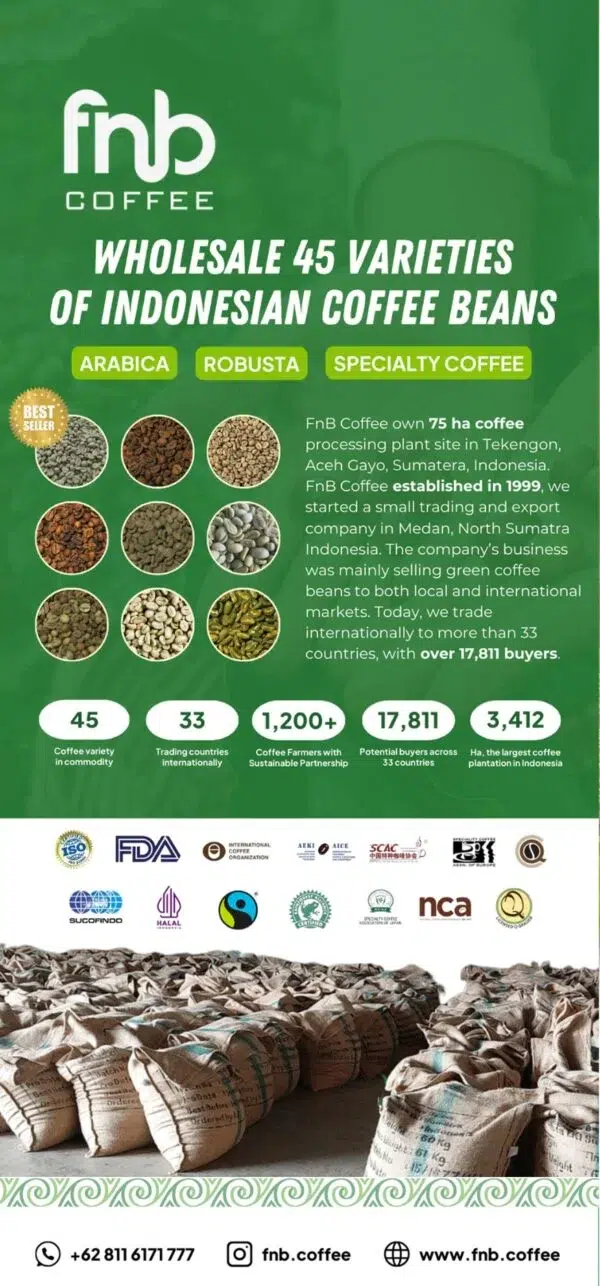
FnB Coffee has supplied Indonesian green coffee beans to roasters in more than 50 countries since 1999, from its own estate and a network of around 1,200 partner farmers in Sumatra and Aceh. Every lot is cupped and graded at origin, and our cupping service can help you choose lots that fit your roast profile. For roasters who want to sell under their own brand, we also roast and pack on a private label basis.
Frequently Asked Questions
What makes Indonesian coffee different to roast?
Much of Indonesia’s Arabica is wet-hulled, which leaves the bean dense and high in moisture. It takes heat quickly and suits a slower early roast phase with longer development. Washed lots from Java, Bali, and Sulawesi roast more like other washed origins.
Which Indonesian coffees suit a dark roast and which suit a light roast?
Sumatra Mandheling, Lintong, and Aceh Gayo hold up well at medium to dark levels, where their body and chocolate notes come forward. Java, Bali Kintamani, Toraja, and Flores keep more sweetness and acidity at lighter levels and suit filter brewing.
Where is the specialty roasting scene strongest in Indonesia?
Jakarta has the largest concentration of specialty roasteries, followed by Bandung, Yogyakarta, Surabaya, Bali, and Medan. Cities near growing regions, such as Takengon in Aceh, roast coffee grown nearby.
Can a roaster abroad buy green coffee directly from Indonesia?
Yes. Exporters such as FnB Coffee ship graded green coffee worldwide, FOB Belawan or any Indonesian port, with samples first and export documents handled. Wholesale pricing starts at 9 metric tons per order, and smaller quantities are available at retail rates.
Conclusion
Indonesian coffee roasters have turned a producing country into a roasting culture, from the dark blends of the kopi tubruk tradition to the single-origin releases of Jakarta’s specialty roasteries. What unites the best of them is respect for the bean: knowing how a wet-hulled Mandheling or a washed Kintamani behaves in the drum, and sourcing green coffee they can trace and trust.
Roasting Indonesian coffee? Browse our green coffee catalog, read our wholesale terms, then contact us to request samples.

I write for FnB Coffee, and I always have a passion for writing anything that can presents Indonesian Coffee Diversity. From the highlands of Sumatra to the volcanic soils of Java and the unique flavours of Sulawesi, I hope to tell a plethora of stories to showcase the history, customs, and creativity behind Indonesia’s coffee culture. From the cultivation side of farming and sustainability, to brewing and flavor notes, my articles dive into everything to find out what makes Indonesian coffee truly one of a kind.