Last Updated on 15 Apr 2026 by Tania Putri
Some coffees taste like coffee. Others taste like an experience. Natural coffee sits firmly in the second category. Once a buyer or cafe owner truly understands what makes it different, it becomes very difficult to go back to treating all coffee as interchangeable.
This guide breaks down what natural processing involves, why it produces such a distinctive cup, how it compares to other methods, and what to prioritize when sourcing seriously. Whether someone is building a café menu or expanding a retail lineup, this is the information that separates a good selection from a great one.
What Is Natural Coffee? The Process Behind the Flavor
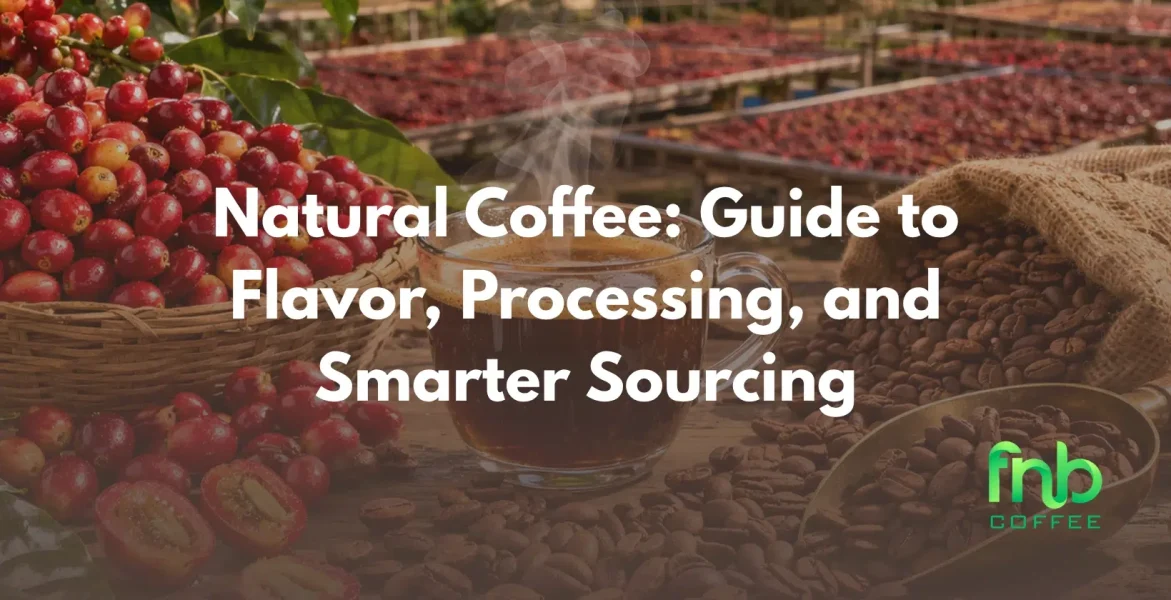
Natural coffee also called dry-processed coffee is made by drying the entire coffee cherry intact, with the fruit skin and pulp still surrounding the green bean inside. This is the oldest coffee processing method in existence, tracing its roots back to Ethiopia and Yemen, where water was too scarce for anything more elaborate.
The process unfolds like this: after harvesting, farmers spread the whole cherries across raised drying beds or open patios and leave them under the sun for three to six weeks. During that time, sugars and fermentation compounds locked inside the fruit gradually migrate into the bean. The slower and more carefully this is managed, the more complex and clean the flavor becomes.
What separates a remarkable natural from a mediocre one comes down almost entirely to control at the drying stage. Too fast, and flavors are flat. Too slow with poor airflow, and fermentation runs out of control, producing sharp, sour, or alcoholic off-notes. Done right, the result is something genuinely special.
How Natural Coffee Compares to Other Processing Methods
To appreciate what natural coffee brings to the cup, it helps to see it alongside the two other dominant methods: washed and honey processing.
| Method | Fruit Contact | Flavor Character | Body | Best For |
|---|---|---|---|---|
| Natural | Full cherry dried intact | Fruity, wine-like, berry, chocolate | Heavy | Filter, single-origin espresso |
| Honey | Partial pulp removed | Stone fruit, balanced sweetness | Medium | Versatile blends, milk drinks |
| Washed | Fully depulped before drying | Bright, clean, floral, acidic | Light–Medium | Clarity-focused filter brewing |
For a buyer putting together a menu, this table is more than reference material it’s a decision framework. A natural coffee from Ethiopia behaves completely differently in a flat white than a Kenyan washed bean does. Understanding these differences is what allows a menu to offer real variety rather than just different names on the same profile.
The Flavor Profile: What to Expect in the Cup
This is where natural coffee builds its reputation and where it occasionally divides opinion. The flavor is inherently more intense, more fermented in character, and more expressive than a washed alternative from the same origin. First-time buyers often describe a high-quality natural as sitting somewhere between excellent coffee and a glass of good red wine. That’s not an overstatement.
Tasting Notes Common in Quality Naturals
- Blueberry and dark berry: most vivid in Ethiopian naturals from Yirgacheffe and Guji zones
- Dark chocolate and caramel: characteristic of Brazilian naturals, which tend toward a rounder, sweeter profile
- Tropical fruit: mango, jackfruit, and dried fig appear regularly in Indonesian and Yemeni origins
- Stone fruit: peach, plum, and apricot notes emerge when fermentation is precisely controlled
- Wine and vinegar: these are defect notes, not desirable ones; they signal poor drying conditions or overripe cherry selection
The critical distinction buyers need to make is between intentional fruitiness layered, pleasant, and complex versus uncontrolled fermentation, which no roasting skill can salvage. This is why sourcing from producers with documented quality control processes matters so much more with naturals than with washed coffees.
Why Quality Varies So Much and How to Evaluate It
Here’s what doesn’t always make it into marketing materials: producing a truly excellent natural coffee is harder than producing a truly excellent washed coffee. The same extended fruit contact that creates flavor complexity also creates substantial risk for the producer.
Uneven drying, temperature swings, or poorly sorted cherries can push fermentation in the wrong direction entirely. This is why two naturals from the same region can taste completely different and why price alone is a poor guide to quality.
4 Things Every Buyer Should Request Before Committing
- SCA cup score from a certified Q-grader: specialty grade begins at 80 points; a quality natural should consistently score 84 or above
- Drying method detail: raised African beds allow better airflow than flat concrete patios and almost always produce a cleaner result
- Moisture content data: finished naturals should read between 10% and 12%; outside that range, drying was irregular
- Lot traceability: single-farm or single-station lots offer consistency across orders; cooperative blends can vary significantly from season to season
These aren’t bureaucratic checkboxes. They’re the details that separate a natural coffee that builds customer loyalty from one that generates complaints.
The Best Origins Worth Knowing
Geography shapes naturals profoundly. Climate, altitude, and local tradition all influence what a natural from a given origin can become. Moreover, some regions simply deliver better results than others.
Ethiopia
Ethiopia sets the benchmark for the entire natural category. The Yirgacheffe, Guji, and Harrar regions deliver clarity, complexity, and vivid fruit character that other origins consistently struggle to match. Light roasting is where Ethiopian naturals shine brightest.
Brazil
Brazil dominates global natural production by volume, and for good reason. Brazilian naturals offer a sweeter, rounder cup, chocolate, nuts, and caramel. It makes them highly practical for espresso blends, retail programs, and price-sensitive applications where consistency counts.
Indonesia
Indonesian naturals, particularly from Flores and Aceh carry heavy body, earthy depth, and a savory sweetness that performs exceptionally well in milk-based drinks and cold brew formats. For buyers building a commercial menu, Indonesian naturals offer genuine value at competitive price points without sacrificing cup quality.
Yemen
Yemeni naturals occupy a genuinely rare position in the specialty world. Grown at extreme altitudes on ancient heirloom varietals and dried using centuries-old traditional methods, they deliver wild complexity dried fruit, warming spice, and a savory depth that experienced buyers describe as irreplaceable. Supply is limited, but for premium menu positioning, Yemeni lots are in a category of their own.
How Roast Level Affects Natural Coffee
Roasting a natural well requires a different approach than roasting a washed coffee of comparable quality. Because the bean already carries residual fruit sugar from the drying process, it responds to heat differently. Also, roast level dramatically shapes how those flavors land in the final cup.
- Light roast brings out the most vibrant fruit character. Ethiopian naturals at a light roast are where blueberry, jasmine, and wine-like complexity shine brightest. The preferred roast level for specialty filter menus.
- Medium roast balances fruit with chocolate and caramel body. Brazilian naturals hit their sweet spot here. approachable, versatile, and well-suited to espresso and milk-based formats.
- Dark roast largely overrides the fruit character that makes naturals distinctive. It’s rarely the right choice for a quality natural, though it suits commodity-grade beans where origin character isn’t the goal.
For buyers working with roasters, specifying the intended roast level before committing to a lot is always the smarter move. It lets the roaster dial in a profile that honours what the processing already built into the bean.
Conclusion
Natural coffee is one of the most expressive and rewarding categories in specialty coffee. Also, it consistently outperforms washed alternatives when the sourcing is right. Understanding the processing method, origin differences, and quality indicators puts any buyer in a strong position to make smarter decisions that genuinely improve what ends up in their customer’s cup.
For buyers ready to source with real confidence, FNB Coffee offers a carefully curated selection of verified specialty-grade naturals from Ethiopia, Brazil, Indonesia, and beyond. Complete with cup scores, full origin documentation, and expert sourcing guidance at every step. Visit FNB Coffee today and discover the exceptional natural coffees truly worth building your entire cafe menu around!