
Last Updated on 06 Aug 2026 by Pippo Ardilles
Java coffee benefits include a smooth and balanced flavor, natural antioxidant content, moderate caffeine support, versatile brewing potential, and strong commercial value for coffee buyers. When consumed in moderation, Java coffee may offer many of the general benefits associated with coffee, including improved alertness, better focus, and antioxidant intake.
However, Java coffee should not be treated as a medical product. Its benefits come mainly from coffee’s natural compounds, such as caffeine and polyphenols, combined with the distinctive growing conditions and processing traditions of Java, Indonesia.
For coffee enthusiasts, roasters, and exporters, Java coffee is valuable not only because of its possible health-related benefits but also because of its recognizable origin, balanced cup profile, and long-standing reputation in the global coffee trade.
What Is Java Coffee?
Java coffee is coffee grown on the island of Java, Indonesia, one of the most historically important coffee-producing regions in the world. The name “Java” became so strongly associated with coffee that it is still used informally as another word for coffee in some countries.
Java’s coffee history is closely linked to Indonesia’s role in global coffee cultivation. The Dutch successfully cultivated coffee trees in what is now Indonesia, especially on Java, before expanding coffee cultivation to other Indonesian islands such as Sumatra and Sulawesi. Java-grown coffee also became part of the historic Mocha Java blend, one of the earliest well-known coffee blends in the world.
Today, Java coffee is appreciated for its smooth body, mild acidity, earthy sweetness, and flavor notes that may include chocolate, nuts, spice, herbs, or subtle floral tones, depending on the variety, farm, altitude, processing method, and roast profile.
1. Java Coffee Has a Smooth and Balanced Flavor
The first major benefit of Java coffee is its balanced flavor profile. Many Java coffees are known for a smooth body, mild acidity, and a rounded taste that is easy to enjoy across different brewing methods.
For everyday coffee drinkers, this makes Java coffee approachable. It is often less sharp than some high-acidity coffees, while still offering enough complexity for specialty coffee lovers. Depending on the lot and roast level, Java coffee may show notes of chocolate, nuts, brown sugar, spice, herbs, or soft fruit.
For roasters and exporters, this balance is commercially useful. A coffee with moderate acidity, stable body, and familiar flavor notes can appeal to a wider market. It can work as a single-origin coffee, a blend component, or a base for milk-based drinks such as cappuccino, latte, and flat white.
2. Java Coffee Provides Natural Antioxidants
Java coffee contains natural antioxidant compounds found in coffee, including polyphenols such as chlorogenic acids. These compounds help the body manage oxidative stress, although the effect depends on overall diet, lifestyle, coffee preparation, and consumption level.
This is one reason coffee is often discussed in nutrition research. Harvard T.H. Chan School of Public Health notes that naturally occurring polyphenols in both caffeinated and decaffeinated coffee can act as antioxidants and may help reduce oxidative stress and inflammation in cells.
For readers, the practical takeaway is simple: plain Java coffee can be part of a balanced lifestyle, especially when consumed without excessive sugar, syrup, or high-calorie creamers. The benefit is stronger when coffee supports an already healthy routine rather than replacing nutritious food, hydration, sleep, or exercise.
3. Java Coffee May Help Improve Alertness and Focus
Java coffee may help improve alertness because it naturally contains caffeine. Caffeine stimulates the central nervous system, which can make people feel more awake, focused, and mentally ready for work or study.
This benefit is not exclusive to Java coffee, but Java coffee can deliver it more enjoyably for people who prefer a smoother, less acidic cup. Harvard notes that low to moderate caffeine intake, around 50–300 mg, may increase alertness, energy, and concentration, while higher doses may cause unwanted effects such as anxiety, restlessness, insomnia, or increased heart rate.
The practical rule is moderation. A cup of Java coffee in the morning or early afternoon may support productivity. Drinking too much, especially late in the day, can disrupt sleep and reduce the overall benefit.
4. Java Coffee Can Support Energy and Physical Performance
Java coffee can help support energy because caffeine may reduce perceived tiredness and increase temporary stamina. This makes it useful before work, travel, exercise, or long focus sessions.
For coffee drinkers, this is one of the most noticeable benefits. A well-brewed cup of Java coffee can provide a clean energy lift without needing sugary energy drinks. For exporters and roasters, this benefit also makes Java coffee easier to position for consumers who want both flavor and functional value.
Still, caffeine tolerance varies. Some people feel energized after one cup, while others may feel nervous or experience stomach discomfort. The FDA states that caffeine can be part of a healthy diet for most people, but too much caffeine may create negative effects, and sensitivity differs from person to person.
5. Java Coffee May Fit Weight Management Routines
Plain Java coffee can fit into a weight management routine because black coffee is naturally low in calories, and caffeine may temporarily affect energy expenditure and appetite. The key is to drink it without excessive sugar, condensed milk, flavored syrup, or heavy cream.
This point should be framed carefully. Java coffee does not directly cause weight loss. It can only support a healthier routine when paired with balanced meals, regular movement, enough sleep, and controlled calorie intake.
For practical use, choose black Java coffee, pour-over, Americano, or lightly sweetened milk coffee. Avoid turning coffee into a dessert drink if the goal is weight management. The benefit comes from coffee itself, not from sugar-heavy add-ons.
6. Java Coffee Is Associated With General Coffee Health Benefits
Java coffee may share the broader health associations found in coffee research, including links with type 2 diabetes, heart health, liver health, and neurological outcomes. These are associations from coffee consumption research, not proof that Java coffee alone prevents disease.
This distinction matters for trust. Harvard summarizes that long-term studies have associated habitual coffee drinking with a lower risk of type 2 diabetes compared with non-drinkers, and also discusses evidence related to cardiovascular health, inflammation, and neurological benefits.
7. Java Coffee Has Strong Sourcing and Export Value
Java coffee is beneficial for buyers, roasters, and exporters because it offers a recognizable origin, a long coffee history, and a cup profile that can suit multiple market segments. Its balanced character makes it easier to introduce to both specialty and commercial coffee buyers.
For B2B coffee sourcing, Java coffee can be positioned in several ways. It can serve as a single-origin Indonesian coffee, a specialty lot for roasters, a component in blends, or a product for buyers looking for Indonesian Arabica or Robusta options. Its moderate body and approachable flavor also make it practical for cafés that need beans for espresso, filter coffee, or milk-based beverages.
For importers and wholesale buyers, the most important factors are not only origin and flavor. They also need consistent grading, moisture control, defect sorting, processing transparency, cupping notes, and reliable export documentation. This is where supplier credibility becomes part of the product benefit.
Java Coffee Characteristics Buyers Should Know
Java coffee is usually valued for its body, aroma, acidity, flavor clarity, and aftertaste. These characteristics help buyers decide whether a lot is suitable for espresso, filter brewing, blending, or private-label products.
The most important characteristic is body. Java coffee often has a medium to full body, giving the cup a pleasant mouthfeel. This makes it flexible for many brewing methods, from manual brew to espresso.
The second characteristic is aroma. Depending on origin and processing, Java coffee may have chocolatey, nutty, spicy, herbal, or floral aromas. These notes can become stronger or softer depending on roast development.
The third characteristic is acidity. Java coffee is often appreciated for moderate acidity, which makes it smoother for drinkers who do not enjoy overly bright or sharp coffees.
The fourth characteristic is cupping performance. Cupping helps buyers evaluate aroma, flavor, aftertaste, acidity, body, balance, uniformity, and defects. The Specialty Coffee Association’s Coffee Value Assessment provides a structured approach to evaluating coffee quality through sensory scoring.
Is Java Coffee Good for Daily Drinking?
Yes, Java coffee can be good for daily drinking when consumed moderately and prepared in a balanced way. For most healthy adults, plain coffee can fit into a normal diet, but caffeine intake should still be monitored.
The FDA cites 400 mg of caffeine per day as an amount generally not associated with negative effects for most adults. This is roughly equal to two to three 12-fluid-ounce cups of coffee, depending on the coffee strength and brewing method. However, caffeine sensitivity varies, and people who are pregnant, breastfeeding, taking certain medications, or managing specific medical conditions should consult a health professional.
For better daily consumption, drink Java coffee earlier in the day, avoid too much added sugar, and pay attention to your body’s response. If you experience insomnia, anxiety, palpitations, stomach discomfort, or headaches, reduce your intake.
How to Get the Best Benefits from Java Coffee
To get the best benefits from Java coffee, choose quality beans, brew them correctly, and consume them in moderation. The quality of the bean and preparation method can affect both taste and the overall drinking experience.
Use freshly roasted beans when possible. Grind only before brewing to preserve aroma. Match the grind size to your brewing method. Use clean water, proper extraction time, and a balanced coffee-to-water ratio. If you are buying green coffee beans for roasting, pay attention to origin, processing method, moisture level, defect count, and cupping notes.
For health-conscious drinkers, the best option is usually black coffee or coffee with minimal additives. For cafés and roasters, the best option is to test several roast profiles to find whether a Java coffee lot performs better as espresso, filter, or blend material.
Who Should Choose Java Coffee?
Java coffee is a good choice for coffee drinkers who want a smooth, balanced, and historically recognized Indonesian coffee. It is also suitable for roasters, cafés, importers, and exporters looking for beans with broad market appeal.
Coffee enthusiasts may enjoy Java coffee because it is flavorful without being too aggressive. Roasters may value it because the cup profile can work across different roast levels. Exporters and buyers may value it because Java is already recognized in global coffee culture, making the product easier to explain and position.

Final Thoughts on Java Coffee Benefits
Java coffee benefits go beyond taste. It offers a smooth cup profile, natural coffee antioxidants, moderate caffeine support, brewing versatility, and strong sourcing value for the coffee trade.
The most accurate way to understand Java coffee is this: it is not a miracle drink, but it is a high-value Indonesian coffee origin with both sensory and practical advantages. For drinkers, it can be a flavorful part of a balanced routine. For buyers and exporters, it can be a reliable origin to explore for single-origin offerings, blends, and wholesale coffee programs.
If you are sourcing Indonesian coffee for wholesale, roasting, or private label needs, Java coffee is worth considering for its balanced flavor, origin recognition, and flexible market potential.
Enjoy the Magic of Java Coffee!
These are just a few of the benefits of Java coffee to consider. Aside from being a fantastic part of Indonesian cultural heritage, this coffee has an exciting flavor and is even beneficial for our health!
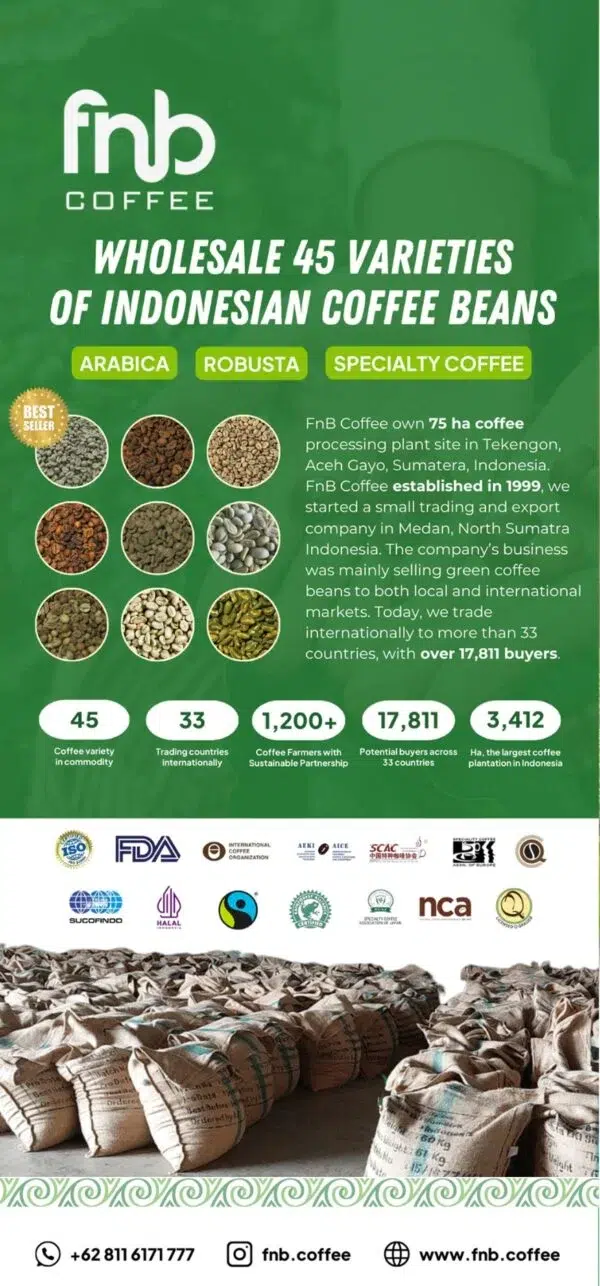
So, do you agree that this coffee is more than just a morning drink? If you want to taste a variety of Indonesian coffee, trust your choice to FnB Coffee!
As one of the best coffee exporters in the foreign sector, we provide a wide variety of quality coffee, both Arabica and Robusta.
What are you waiting for? Head over to our Indonesia Arabica coffee product page to check out the Java coffee and a variety of other must-try coffees. Experience the joy of Java coffee and its various health benefits with our premium Indonesian coffee!


FAQs About Java Coffee Benefits
1. What are the main benefits of Java coffee?
The main benefits of Java coffee are its smooth flavor, natural antioxidant content, caffeine-based alertness support, brewing versatility, and strong value as an Indonesian coffee origin for buyers and exporters.
2. Is Java coffee healthy?
Java coffee can be part of a healthy lifestyle when consumed moderately. Its potential benefits come from coffee’s natural compounds, including caffeine and polyphenols. It should not be treated as medicine or used to replace professional health advice.
3. Does Java coffee have more caffeine than regular coffee?
Not always. The caffeine level depends more on the coffee species, roast, grind size, brewing method, and serving size than on the Java origin alone. Robusta generally contains more caffeine than Arabica.
4. What does Java coffee taste like?
Java coffee often tastes smooth, balanced, mildly acidic, and medium to full-bodied. Depending on the lot, it may have notes of chocolate, nuts, spice, herbs, or subtle sweetness.
5. Is Java coffee good for exporters?
Yes. Java coffee can be attractive for exporters because it has a recognized origin, a long history in the global coffee trade, and a balanced flavor profile suitable for different market segments.

I write for FnB Coffee, and I always have a passion for writing anything that can presents Indonesian Coffee Diversity. From the highlands of Sumatra to the volcanic soils of Java and the unique flavours of Sulawesi, I hope to tell a plethora of stories to showcase the history, customs, and creativity behind Indonesia’s coffee culture. From the cultivation side of farming and sustainability, to brewing and flavor notes, my articles dive into everything to find out what makes Indonesian coffee truly one of a kind.