Last Updated on 22 Jun 2026 by Tania Putri
When you buy from a java wine coffee supplier, you are getting green beans from East Java that have been through a wine, or extended natural, fermentation before drying. That extra step is what gives the cup its signature fruit-forward, slightly boozy character, and it is also why two lots with the same label can taste very different. For green coffee buyers, the supplier choice shapes flavor, consistency, and landed cost long before roasting begins. This guide covers where the coffee grows, how the process works, what to expect from a supplier, and how to compare options before you commit.
What Is Java Wine Coffee?
Java wine coffee is Arabica grown in the highlands of East Java, then finished with a long, controlled fermentation the trade calls the wine process. Much of it comes from the slopes around Mount Ijen and Bondowoso, where altitude and cool nights slow cherry ripening and concentrate sugars.
The “wine” name is descriptive, not literal. There is no alcohol in the finished bean, but the extended fermentation builds fruity, almost boozy aromatics that remind tasters of red wine. Compared with washed Java lots, wine-process beans trade some clean acidity for body and depth.
Knowing the beans processing methods behind a lot often tells you more about how it will roast than the region name alone. A good java wine coffee supplier will state the exact method, the drying time, and the varietal on every spec sheet.
Search terms vary, too. You may see the same beans described by a javanese wine coffee supplier, a java coffee supplier, or simply a java wine supplier, but the labels overlap. Focus on the spec sheet, not the wording.
Why Does Wine Processing Change the Flavor?
Wine processing changes flavor because the cherries ferment longer, often with restricted oxygen, before the beans are dried. Extended fermentation lets yeasts and bacteria develop more fruit acids and aromatic compounds, which carry into the roasted cup as berry, tropical fruit, and wine-like notes.
The trade-off is consistency. Longer fermentation is harder to control, so flavor can swing between harvests or even between drying beds. Independent education sources such as Perfect Daily Grind explain how anaerobic and extended fermentations shape both flavor and risk.
For buyers, the lesson is simple. The process creates the upside, but documentation protects you from the downside. Ask any java wine coffee supplier how they stabilize fermentation and how they screen for defects before a lot ships.
What Should You Expect from a Java Wine Coffee Supplier?
A dependable java wine coffee supplier should give you three things up front: verifiable quality data, clear commercial terms, and traceability to the farm or washing station. If any of these is missing, treat the offer with caution.
Quality data means a Q-grade and an SCA cupping score, ideally from a licensed Q-grader. Many specialty coffee buyers look for 82 and above on the 100-point scale. You can see how a cupping service by Q-graders documents each lot, and how scoring follows Specialty Coffee Association protocols.
Grading and naming should follow recognized rules as well. Indonesia uses defect-count grades, and a transparent supplier maps its labels to the Indonesian coffee grading standards so you know exactly what Grade 1 means.
Finally, a credible supplier will quote in standard trade terms, list a realistic MOQ, and confirm export paperwork before asking for a deposit.
How do Indonesia’s Wine-Processed Origins Compare?
Java is one of several Indonesian origins offered as a wine, or extended natural, coffee, and each carries a different flavor signature. Comparing them helps you match a lot to your house style and your customers’ taste.
| Origin (wine process) | Region | Typical flavor notes | Body |
|---|---|---|---|
| Java Wine | East Java (Ijen, Bondowoso) | Red fruit, grape, mild spice | Round, syrupy |
| Mandheling Wine | North Sumatra | Dark fruit, cocoa, earthy depth | Heavy, full |
| Gayo Wine Coffee | Aceh (Gayo highlands) | Tropical fruit, herbal, bright finish | Medium, juicy |
| Bali Wine Coffee | Bali (Kintamani) | Citrus, stone fruit, floral lift | Light, clean |
A reputable java wine coffee supplier that handles multiple regions can send a comparison set so you taste the differences side by side rather than guessing from descriptions. The International Coffee Organization publishes useful context on Indonesian production and global demand if you want the wider market picture.
How Green Coffee Export Terms Work
Export terms decide who pays for what and where risk transfers, so they matter as much as cup score. The most common ones you will see from any java wine coffee supplier are below.
- FOB (Free On Board): the seller covers costs to load the coffee onto the vessel; you handle freight and insurance from there.
- CIF (Cost, Insurance, Freight): the seller covers freight and insurance to your destination port.
- FCL vs LCL: a Full Container Load is most economical at volume, while Less than Container Load suits smaller test orders.
- MOQ (Minimum Order Quantity): the smallest lot a supplier will sell, often one bag for samples or a partial container for production.
- Phytosanitary certificate: official confirmation that the beans meet plant-health rules, issued under government oversight before export.
Indonesian exports follow rules set by the Indonesian Ministry of Trade, and your supplier should handle the phytosanitary certificate as routine. Reading a supplier’s wholesale terms and process before you negotiate saves time and avoids surprises.
A Pre-Purchase Sourcing Checklist
Before you place an order with a java wine coffee supplier, run through a short checklist. It keeps the conversation focused and filters out sellers who cannot back up their claims.
- Request a current sample and a spec sheet with varietal, process, altitude, and harvest date.
- Confirm the Q-grade and SCA cupping score, and ask who graded it.
- Check that the grades map to recognized Indonesian standards.
- Clarify export term (FOB or CIF), MOQ, and lead time in writing.
- Verify that phytosanitary and origin documents are included.
- Ask how fermentation is controlled from lot to lot for consistency.
Common Sourcing Mistakes to Avoid
The most common mistake is buying on flavor description alone, without a sample or a cupping score. The second is ignoring export terms until after a price is agreed, which can quietly add cost. A careful java wine coffee supplier helps you avoid both by leading with data and clear terms.
Other frequent errors include ordering a full container before testing a small lot, assuming every wine coffee tastes the same, and skipping the spec sheet. Each one is avoidable with a sample, a written agreement, and a side-by-side cupping.
Frequently Asked Questions
What is a Java wine coffee supplier?
A Java wine coffee supplier is a green coffee seller that sources and exports Arabica from Java finished with an extended, wine-style fermentation. A good one provides cupping scores, defect grading, traceability, and standard export terms so buyers can confirm quality and consistency before placing a production order.
How is wine coffee processed?
Wine coffee is processed by fermenting whole cherries for an extended period, often with limited oxygen, before slow drying. This builds fruity, wine-like aromatics in the bean. Because long fermentation is harder to control, careful drying and lot-by-lot cupping are essential to keep the flavor consistent across harvests.
Is Java wine coffee the same as natural-process coffee?
No, though they are related. Natural processing dries the whole cherry around the bean, while wine processing adds a longer, often oxygen-restricted fermentation before drying. That extra fermentation intensifies fruit and wine-like notes. All wine coffees are natural at heart, but not every natural coffee is a wine process.
What MOQ should I expect from a wine coffee supplier?
Expect a single bag or two for samples, and roughly a partial to full container for production runs. A typical wine coffee supplier sets MOQ by your destination, freight option, and whether you order Less than Container Load or a Full Container Load. Always confirm the figure in writing.
Does Java wine coffee need a phytosanitary certificate to export?
Yes. Green coffee leaving Indonesia requires a phytosanitary certificate confirming the beans meet plant-health rules. Your supplier normally arranges it alongside the commercial invoice and certificate of origin. Confirm the document is included before shipment, since missing paperwork can delay customs clearance at your destination port.
How can I evaluate a Java wine coffee supplier before buying?
Start with a sample and a cupping score, then check traceability, grading, and export terms. Compare at least two lots side by side, and ask how fermentation is controlled. A transparent supplier will answer each point with documents rather than adjectives, which makes the decision much easier.
Final Thoughts and Next Steps
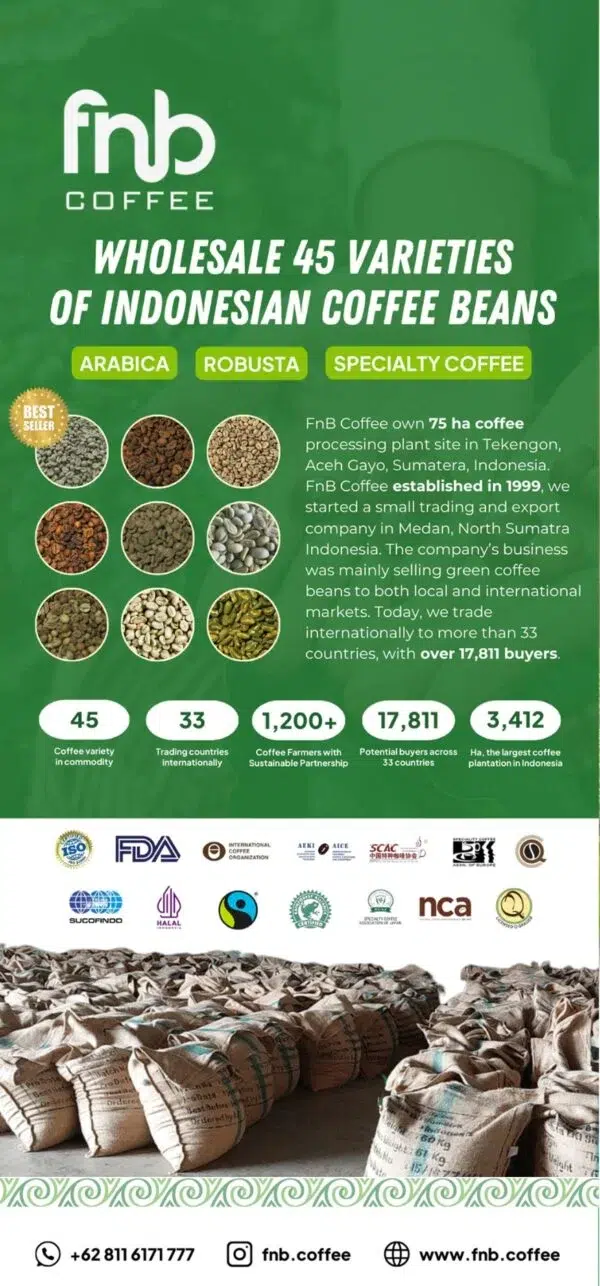
Choosing wine-process Java comes down to evidence: documented scores, clear grading, and honest export terms beat any tasting note. That is the standard behind FnB Coffee, a plantation-to-port operation with thirty years of heritage, 1,200 farmer partners, and Q-grader cupping at SCA 82 and above, built so buyers can verify quality before they ever commit.
If wine-process beans fit your sourcing plans, the simplest next step is to taste one. Explore the Java Wine lot from this java wine coffee supplier, request a sample, and compare it against other origins. Seeing the spec sheet and cupping notes side by side will tell you far more than any tasting description could.