Last Updated on 12 Mar 2026 by Tania Putri
Luwak coffee attracts attention because it combines rarity, unusual processing, and controversy in one product. At the center of that story is the kopi luwak animal, which has turned a regional coffee tradition into a global luxury item. For some buyers, it is a once-in-a-lifetime cup. For others, it is a warning sign about animal welfare, inflated pricing, and clever marketing.
A useful explanation has to do more than repeat the novelty. It should clarify what this coffee is, how it is made, why it costs so much, and why quality varies so widely. It should also help buyers understand what separates a credible product from a questionable one.
What Is Luwak Coffee and Why Is the Kopi Luwak Animal Involved?
Luwak coffee, often called civet coffee, is made from coffee cherries that have been eaten and later excreted by civets, the kopi luwak animal responsible for this unique process. The beans are collected, washed thoroughly, processed, roasted, and brewed like other specialty coffees.
The unusual part is what happens before collection: the fruit passes through the kopi luwak animal’s digestive tract. This process is believed to affect the bean in two ways. First, civets tend to choose ripe cherries when they forage naturally, which may improve the starting material. Second, enzymes and fermentation during digestion may alter some proteins in the bean, which can influence flavor and body after roasting.
What Exactly Is the Kopi Luwak Animal?
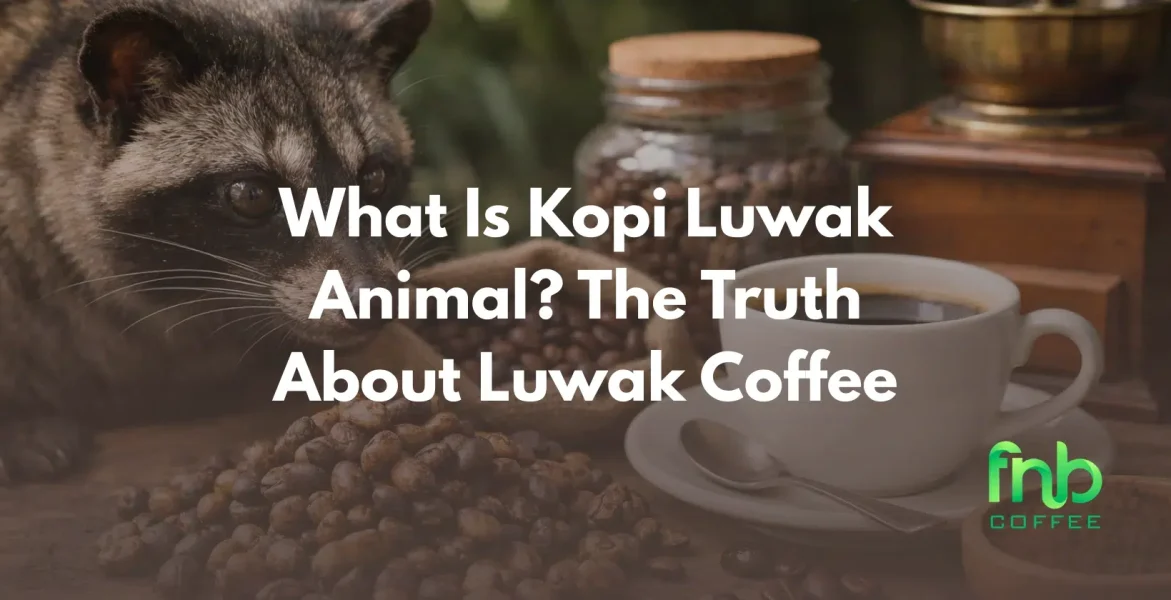
The kopi luwak animal is the Asian palm civet, a small, nocturnal mammal found across parts of South and Southeast Asia. Despite its cat-like face and movement, it is not a cat. It belongs to a different family and has an omnivorous diet that can include fruit, insects, and small animals.
This is one reason the product became famous: it combines a recognizable wild animal, a distinct origin story, and a labor-intensive collection process. That combination makes it memorable, even for people who have never tasted it.
| Topic | Key fact |
|---|---|
| Coffee type | Luwak coffee is coffee made from beans collected after civets digest the fruit pulp. |
| Animal source | The kopi luwak animal is the Asian palm civet, a nocturnal mammal native to parts of Asia. |
| Bean selection | Wild civets may prefer ripe cherries, which can improve raw material quality. |
| Main controversy | Animal welfare and fake labeling are the two biggest concerns in the market. |
| Buying priority | Verified sourcing matters more than novelty alone. |
How coffee is produced from the kopi luwak animal
Natural Selection in the Wild
In traditional wild collection, civets roam freely and eat cherries that appear ripe and attractive. Supporters of wild-sourced production argue that this natural selection is one reason some lots taste cleaner and sweeter than expected. In practice, however, the quality still depends on the coffee variety, farm conditions, and how carefully the beans are handled after collection.
What Digestion Changes
Producers often say that digestion reduces bitterness and creates a smoother cup. The science is less dramatic than many advertisements suggest, but there is evidence that the journey through the digestive tract of the kopi luwak animal can alter the bean’s chemical structure to some extent. The result may be a softer profile, lower perceived acidity, and a rounder body.
From Collection to Roasting
The full process usually follows these steps:
- Civets eat ripe coffee cherries.
- Farmers collect the droppings containing intact beans.
- The beans are washed, sorted, and dried.
- The parchment is removed, then the coffee is graded and roasted.
- The roasted coffee is brewed or packaged for sale.
Clean handling is crucial. Poor sanitation or careless drying can ruin the coffee quickly. That is why reputable processing matters just as much as the animal story.
Why the Kopi Luwak Animal Makes This Coffee Rare and Expensive
The price of luwak coffee is driven by scarcity, labor, and reputation. Genuine wild-sourced beans are difficult to collect in meaningful volume. Workers must locate droppings, separate usable beans, clean them thoroughly, and process very small lots. That is time-consuming and expensive compared with standard coffee harvesting.
Other factors also push prices higher:
- Limited supply from credible wild sources
- High sorting and cleaning labor
- Export, packaging, and niche-market positioning
- Global demand fueled by novelty and luxury branding
- Added costs for certification or traceability when done properly
Taste, Quality, and Authenticity: Beyond the Kopi Luwak Animal
What Does It Taste Like?
Many drinkers describe luwak coffee as smooth, earthy, low in bitterness, and relatively gentle in acidity. Depending on origin and roast, it may show notes of cocoa, nuts, spice, or muted fruit. Some tasters enjoy its mellow profile, while others find it less vibrant than top-tier specialty coffees from the same region.
Why Quality Varies
The kopi luwak animal may be the headline, but the final quality depends on factors that serious coffee buyers already know well:
- Coffee variety
- Altitude and terroir
- Ripeness of the cherry
- Clean processing
- Roast profile
- Storage freshness
A well-handled lot can taste refined and balanced. A poorly handled one can taste flat, musty, or stale.
Why Authenticity Is a Major Issue
Because the product is rare and expensive, fraud is common. Some bags are blended with ordinary coffee. Others use vague claims such as “civet-style” or “luwak process” without clear sourcing proof. In lower-quality markets, even the country of origin may be unclear.
| Type | Typical Sourcing | Welfare Risk | Traceability | Price Pattern | Buyer Confidence |
|---|---|---|---|---|---|
| Wild-sourced | Beans collected from free-roaming civets | Lower if truly wild | Often limited unless documented well | Usually very high | Moderate to high when verified |
| Farmed | Civets kept in captivity and fed cherries | Often high | Can be inconsistent | High, but not always justified | Low to moderate |
| Certified ethical | Sourcing backed by welfare or farm standards | Lower when standards are credible | Stronger documentation | High but easier to justify | Higher |
Ethical Concerns Around the Kopi Luwak Animal
The hardest issue surrounding the kopi luwak animal is not flavor. It is welfare. To meet demand, some producers keep civets in cages and feed them large amounts of coffee cherries. Reports from animal welfare groups and investigative journalists have raised concerns about stress, poor diet, isolation, and unsanitary conditions in some operations.
That does not mean every seller works irresponsibly. Some producers claim to rely on wild collection or better monitored systems. Still, the burden of proof matters. A responsible buyer should expect more than a marketing sentence on a package.
How to Buy Responsibly When the Kopi Luwak Animal Is Part of the Story
Anyone considering a purchase should focus less on drama and more on evidence. The most credible sellers explain sourcing clearly, identify origin, discuss kopi luwak animal welfare, and offer documentation instead of vague luxury language.
A practical buying checklist includes the following:
- Look for clear origin details, not just “premium luwak coffee”
- Check whether the seller explains wild collection, farm conditions, or certification
- Prefer sellers that discuss welfare openly and specifically
- Be cautious with unusually cheap products, since true supply is limited
- Review roast date, packaging quality, and freshness claims
- Search for third-party reviews that discuss taste, not only novelty
FAQ
What animal is the kopi luwak animal?
It is the Asian palm civet, a small nocturnal mammal found in parts of South and Southeast Asia. It eats ripe coffee cherries, and the beans are later recovered after digestion.
Is kopi luwak ethical?
It can be, but only when sourcing protects animal welfare. Wild-collected or well-verified ethical production is generally more credible than coffee linked to caged civets.
Why is kopi luwak expensive?
It is costly because genuine supply is limited, collection is labor-intensive, and global demand is driven by rarity and reputation. Verified ethical sourcing can also increase costs.
How can buyers find authentic luwak coffee?
Authentic products usually come with clear origin details, transparent sourcing information, and evidence of ethical handling or certification. Vague branding and very low prices are common warning signs.
Conclusion
Kopi luwak remains one of the world’s most debated luxury coffees because rarity, processing, flavor, and ethics all matter at once. Understanding the kopi luwak animal helps readers separate curiosity from marketing, compare products more realistically, and decide whether the experience truly matches their budget, values, taste preferences, and expectations before spending money at all.
For shoppers ready to explore this niche coffee, the FNB Coffee website offers a practical place to start, with product details that should be checked against sourcing and certification claims. Buying through a trusted seller matters when the kopi luwak animal is central to quality, ethics, and authenticity, making FNB Tech worth considering for buyers.