Last Updated on 20 Aug 2026 by Pippo Ardilles
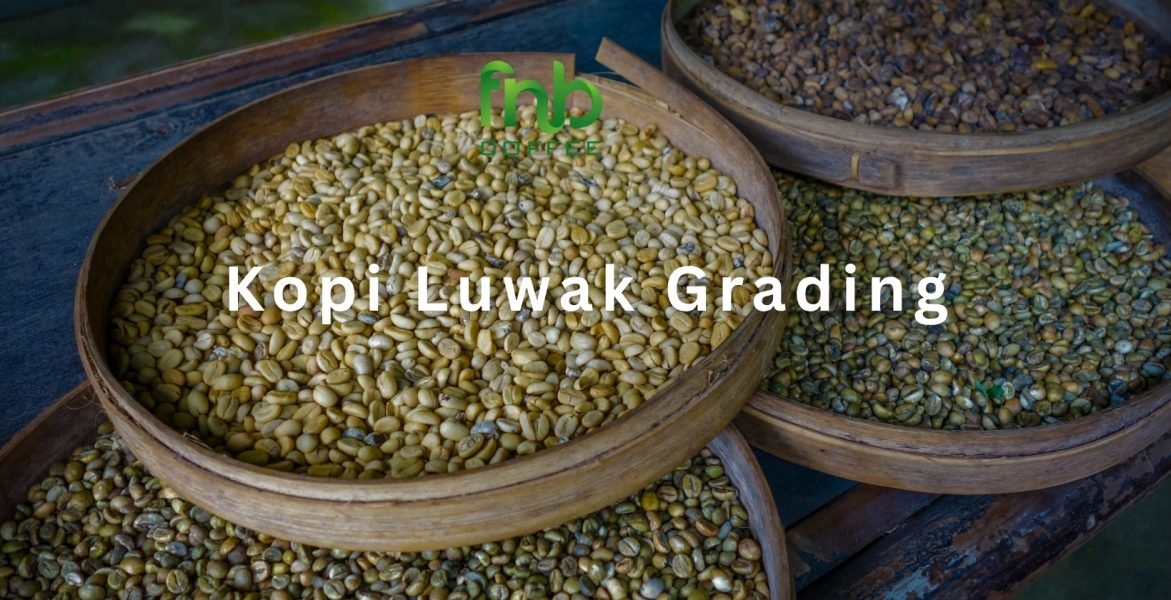
Grading is what separates a genuine, high-value luwak lot from an overpriced or mislabeled one and it is the skill most buyers in this category are missing. We grade every luwak lot we ship against several standards. Here is each one, including how the beans score under both the Indonesian and SCA systems, so you know exactly what you are paying for. Grading happens on the raw green coffee beans, before any roast character enters the picture.
How is Kopi Luwak (Civet Coffee) Graded?
There is no single, universal “kopi luwak grade” which is exactly why the category is so easy to overpay in. You grade it across several independent dimensions, and the best lots score well on all of them. Two systems matter for a US buyer the Indonesian defect grade a lot ships under, and the SCA classification your roastery thinks in. The table sums it up, the sections below explain the ones that carry the most weight.
| Grading dimension | Top grade to source |
|---|---|
| Defect grade | Grade 1 (≤11 defects / 300 g) and SCA specialty grade |
| Bean species | Arabica – more complex, more prized |
| Sourcing method | Wild collected or genuinely cage free |
| Authenticity | Certificate of authenticity plus traceability |
| Moisture / water activity | 10.5-12.5% moisture, water activity below 0.70 |
| Preparation & screen | Triple hand-picked, uniform 16-18 screen |
Defect grade Indonesian and SCA
Indonesian green coffee ships on a defect count from Grade 1 down to Grade 6. Grade 1 is the top generally 11 or fewer defects in a 300-gram sample and it is the baseline for any serious luwak offer. But most US roasters do not think in Grade 1, they think in SCA terms. The SCA grades from a 350-gram sample and splits defects into Category 1 (primary) and Category 2 (secondary). To count as specialty grade, a lot needs zero Category 1 defects, no more than five Category 2, and a cupping score of 80+ quality luwak usually lands at 8-85. Quote a buyer both numbers and you have answered the question before they ask it.
What Actually Counts As a Defect?
This is the part most sellers skip what is actually being counted:
| Category 1 primary (zero allowed for specialty) | Category 2 secondary (max 5 for specialty) |
|---|---|
| Full black bean, full sour bean | Partial black / partial sour bean |
| Dried cherry or pod | Floater, immature / quaker bean |
| Fungus-damaged bean | Withered bean, shell |
| Foreign matter, severe insect damage | Broken / chipped / cut, hull / husk, slight insect damage |
Luwak adds two defects you will not see in ordinary coffee, both from the civet’s digestion: surface erosion, where stomach acids etch the bean, and partial digestion, where an under-fermented bean cups flat or grassy. A careful grader pulls these before they reach you.
Two numbers tell you whether a lot holds up in your warehouse. Keep moisture at 10.5-12.5% dry enough to store, wet enough to roast and water activity below 0.70, which resists mold and holds the cup for 6-12 months. A lot that reads Grade 1 but sits at 13% moisture will disappoint you three months in.
The Rest That Rounds Out The Grade
- Species. Civets eat both arabica and robusta cherries. Arabica luwak is the more complex, more prized, pricier cup always confirm which one you are buying.
- Sourcing. Wild-collected (civets roam and self-select ripe cherries) is the top tier. Genuinely cagefree is next, caged civet coffee sits at the bottom and carries welfare concerns US and EU buyers increasingly reject. If cage free matters, put it in writing.
- Authenticity. The market is flooded with fakes, so a certificate of authenticity and a traceable chain are a grade of their own. No provenance, no premium.
- Preparation. Top lots are triple hand-sorted to strip out residue, broken beans, and foreign matter left by wet-hulling. Clean prep is something you can see in the sample a reliable mark of a high grade.
- Screen size. Uniform, larger beans a consistent 16-18 screen, measured in 64ths of an inch roast more evenly, so uniformity here is not cosmetic. It is what gives you a predictable roast batch after batch.
Watch Out For “Marketing Grades”
You will see “AAA,” “Super,” or “Premium.” None are standardized they mean whatever the seller wants. Map every one back to the real dimensions: defect grade (Indonesian and SCA), species, sourcing, moisture, and authenticity. If a supplier cannot describe those, the letter on the bag is worthless.
For most roasters and importers the target is simple: Grade 1 and SCA specialty, arabica, wild-collected or certified cage-free, certified authentic and cleanly sorted, at 10.5-12.5% moisture, water activity under 0.70, and a consistent 16-18 screen. That is the combination that justifies luxury pricing and protects your brand on resale.
Why Source From Indonesia?
Grading happens at origin, so buying directly from Indonesia is how you control it instead of trusting a reseller’s label. You specify grade, species, sourcing, moisture, and authenticity, request pre-shipment samples, and get the export docs you need. That is what FnB Coffee supplies: graded kopi luwak with certificates, flexible MOQ, and wholesale pricing to SCA standards, FOB Belawan. Grade on every dimension, ignore the marketing letters, and you will always know what is in the bag.
Looking for premium graded kopi luwak for your roastery or import business? FnB Coffee supplies high-quality Indonesian green coffee with flexible MOQ and worldwide shipping. Contact us to request a sample or talk through your sourcing needs.

I write for FnB Coffee, and I always have a passion for writing anything that can presents Indonesian Coffee Diversity. From the highlands of Sumatra to the volcanic soils of Java and the unique flavours of Sulawesi, I hope to tell a plethora of stories to showcase the history, customs, and creativity behind Indonesia’s coffee culture. From the cultivation side of farming and sustainability, to brewing and flavor notes, my articles dive into everything to find out what makes Indonesian coffee truly one of a kind.