Last Updated on 22 May 2026 by Pippo Ardilles
Liberica coffee is known for its unusually large, asymmetrical beans, bold tropical aroma, full body, low acidity, and distinctive flavor notes that can range from jackfruit, floral, and fruity to woody, smoky, and earthy. Compared with Arabica and Robusta, Liberica is much rarer, harder to process consistently, and more polarizing in the cup, but it offers a memorable profile for specialty roasters, coffee enthusiasts, and green coffee importers looking for something beyond mainstream coffee species.
Quick Summary of Liberica Coffee Characteristics
Liberica coffee is best recognized by its large bean size, tall tree structure, tropical fruit aroma, heavy body, and uncommon smoky-woody flavor profile. It is often grown in lowland tropical regions and remains a niche coffee because of its lower yield, processing challenges, and unusual taste.
| Characteristic | Liberica Coffee Profile |
|---|---|
| Scientific name | Coffea liberica |
| Bean shape | Large, asymmetrical, often elongated or teardrop-like |
| Common aroma | Jackfruit, tropical fruit, floral, woody, smoky |
| Flavor | Fruity, floral, woody, smoky, nutty, sometimes earthy |
| Body | Full, heavy, sometimes syrupy |
| Acidity | Usually low to medium |
| Caffeine | Generally close to Arabica and lower than Robusta, depending on source and sample |
| Growing area | West Africa, Southeast Asia, especially Malaysia, the Philippines, Indonesia, and selected tropical regions |
| Best for | Specialty roasters, adventurous coffee drinkers, blending, niche single-origin offerings |
| Main challenge | Low availability, inconsistent processing, polarizing flavor |
What Is Liberica Coffee?
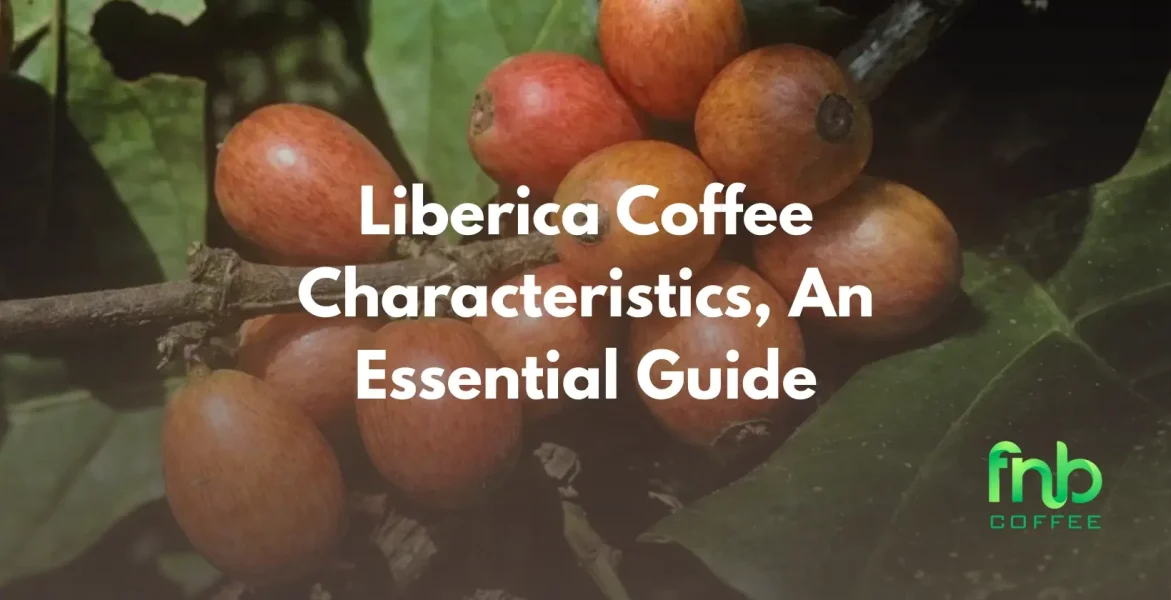
Liberica coffee is a cultivated coffee species known for producing large cherries, large beans, and a cup profile that tastes very different from common Arabica and Robusta. Botanically, the plant can grow much taller than typical coffee shrubs, with broad leaves and large fruits, making it more tree-like than many commercial coffee plants.
Historically, Liberica became important in the late 19th century when coffee leaf rust damaged Arabica plantations across Asia. It was introduced as a more resilient alternative, especially in lowland tropical regions where Arabica struggled. However, its commercial growth declined as Robusta became more dominant due to stronger yields, easier processing, and broader market acceptance.
One important note: Liberica and Excelsa are often confused in the market. Recent research discussed by the Specialty Coffee Association explains that Liberica and Excelsa have distinct morphology, flavor tendencies, and genetic identities, so buyers should confirm whether a lot is true Coffea liberica or Excelsa.
What Does Liberica Coffee Taste Like?
Liberica coffee usually tastes bold, full-bodied, low in acidity, and highly aromatic, with notes that may include jackfruit, tropical fruit, flowers, nuts, wood, smoke, and earth. The cup can be sweet and complex when carefully grown, processed, and roasted, but it can also taste heavy, fermented, or overly woody if handled poorly.
The most recognizable sensory trait of Liberica is its unusual aroma. Many drinkers describe it as fruity and floral, often with a jackfruit-like or tropical fruit character. Some lots lean toward smoky, woody, nutty, or herbal notes, especially at darker roast levels. This makes Liberica memorable, but not always universally liked. It is the kind of coffee people either remember fondly or discuss like a small personal crisis.
Liberica generally has a heavier mouthfeel than many Arabica coffees. Its full body makes it suitable for drinkers who enjoy rich, dense coffee rather than bright, tea-like cups. Acidity is usually lower, so the cup often feels rounder and less sharp.
How Are Liberica Beans Different from Arabica and Robusta?
Liberica beans are usually larger, more irregular, and more asymmetrical than Arabica or Robusta beans. They can look elongated, uneven, or teardrop-like, which makes them visually easy to distinguish from the more oval Arabica and rounder Robusta beans.
The plant itself is also different. PROSEA describes Coffea liberica as an evergreen shrub or tree that can reach up to 20 meters, with leaves measuring roughly 14–38 cm long and fruits larger than many common coffee types.
This large and irregular bean structure matters for roasters. Liberica may roast differently from Arabica or Robusta because of its size, density, and moisture distribution. Roasters should avoid assuming that a standard Arabica roast curve will work perfectly. Small test batches are strongly recommended before scaling up production.
Liberica vs Arabica vs Robusta
Liberica differs from Arabica and Robusta in flavor, bean size, caffeine level, cultivation conditions, and market availability. Arabica is usually prized for sweetness and acidity, Robusta for strength and crema, while Liberica is valued for rarity, bold aroma, large beans, and distinctive tropical-woody flavor.
| Feature | Liberica | Arabica | Robusta |
|---|---|---|---|
| Flavor profile | Tropical fruit, floral, woody, smoky, nutty | Sweet, floral, fruity, chocolate, citrus | Earthy, bitter, strong, sometimes woody |
| Body | Full and heavy | Light to medium | Medium to heavy |
| Acidity | Low to medium | Medium to high | Low |
| Bean shape | Large and asymmetrical | Oval and elongated | Smaller and rounder |
| Caffeine | Generally lower than Robusta | Moderate | High |
| Market availability | Rare and niche | Widely available | Widely available |
| Best use | Specialty lots, blends, unique single origins | Filter coffee, espresso, specialty lots | Espresso blends, instant coffee, commercial blends |
Where Does Liberica Coffee Grow?
Liberica coffee grows best in warm tropical regions, especially lowland areas where Arabica may struggle. It is native to West and Central Africa and is now cultivated in several regions including Malaysia, the Philippines, Indonesia, and other tropical countries.
In Southeast Asia, Liberica has cultural and commercial importance in specific regions. In the Philippines, it is often associated with Kapeng Barako. In Malaysia, it has long been cultivated in areas such as Johor and other western regions. In Indonesia, Liberica is grown in limited areas, including peatland regions such as Jambi and the Meranti Islands, where its ability to handle challenging soils adds local value.
Why Is Liberica Coffee Rare?
Liberica coffee is rare because it has lower market demand, lower or less consistent yield, difficult processing requirements, and a flavor profile that does not appeal to every coffee drinker. PROSEA notes that Liberica contributes only a small share of world coffee production, while SCA explains that its global role declined as Robusta became more commercially dominant.
Its rarity is also part of its commercial appeal. For roasters and importers, Liberica can create a differentiated product line, especially for customers interested in rare species, Southeast Asian origins, climate-resilient crops, or unusual sensory experiences.
Is Liberica Coffee High in Caffeine?
Liberica coffee is not typically considered high in caffeine compared with Robusta. Published composition data from PROSEA lists Liberica caffeine content on a dry matter basis at around 0.5–1.8%, while some product specifications and industry references place it near Arabica-level caffeine rather than Robusta-level caffeine.
For drinkers, this means Liberica may feel less intense than Robusta in caffeine impact, even though the flavor can taste bold and heavy. Caffeine content still varies by origin, variety, processing, roast level, and measurement method.
How to Roast Liberica Coffee
Liberica coffee should be roasted carefully because its large, uneven beans can behave differently from Arabica or Robusta. A light to medium roast is often recommended when the goal is to preserve fruit, floral, and tropical sweetness, while a medium-dark roast can emphasize body, woody depth, and smoky notes.
For roasters, the safest approach is to run small sample roasts first. Track moisture, density, first crack behavior, development time, and post-roast resting. Because Liberica can have a strong aromatic profile, over-roasting may flatten the fruit notes and exaggerate woody or bitter flavors.
Practical roasting tips:
- Start with a conservative batch size.
- Avoid aggressive heat application early in the roast.
- Watch for uneven color development due to bean size variation.
- Cup multiple roast levels before choosing a production profile.
- Let the coffee rest before final evaluation, especially for filter or espresso use.
Best Brewing Methods for Liberica Coffee
The best brewing methods for Liberica coffee are methods that balance its heavy body and strong aroma, such as French press, pour-over, immersion brewers, and espresso blends. The ideal method depends on whether the goal is to highlight sweetness, body, or aromatic complexity.
For a cleaner cup, use pour-over with a medium grind, moderate water temperature, and controlled extraction. This helps reduce excessive heaviness and lets tropical fruit or floral notes show more clearly.
For a heavier cup, use French press or immersion brewing. This emphasizes the dense mouthfeel and can make Liberica feel rich and round.
For espresso, Liberica can work as a small blending component. It may add body, aroma, and uniqueness, but using it as 100% espresso requires careful dialing because the flavor can become intense quickly.
Is Liberica Coffee Good for Importers and Roasters?
Liberica coffee can be valuable for importers and roasters who want a rare, differentiated coffee with strong storytelling potential. It is especially suitable for specialty releases, limited lots, education-focused cuppings, Southeast Asian origin programs, and buyers looking beyond Arabica and Robusta.
However, Liberica is not a simple commodity substitute. Buyers should evaluate quality carefully because processing, drying, sorting, and roast performance can vary widely. A good Liberica lot can be distinctive and memorable; a poorly handled lot can taste rough, overly fermented, or flat.
For commercial buyers, check these points before purchasing:
- Confirm whether the lot is true Liberica or Excelsa.
- Request green coffee samples before bulk orders.
- Ask for origin, harvest period, processing method, and drying details.
- Review moisture content, defect count, and screen-size consistency.
- Cup the coffee at different roast levels.
- Check whether the supplier can provide consistent volume.
- Confirm packaging, export documents, and shipment terms.
How to Choose Quality Liberica Green Coffee Beans
To choose quality Liberica green coffee beans, focus on clear origin information, clean processing, consistent drying, low defect count, and a cup profile that matches your target market. Do not buy Liberica based only on rarity, because rarity alone does not magically make a coffee good. Humanity has tested this logic with many terrible limited-edition products.
A strong supplier should be able to provide:
- Product specification sheet
- Green coffee sample
- Cupping notes
- Moisture and defect information
- Processing method
- Crop or harvest information
- Packaging options
- Export documentation support
- Wholesale or container-order capability
For importers, a cupping session or sample approval process is especially useful because Liberica has a more unusual sensory profile than mainstream Arabica or Robusta.
If you are looking for Indonesian Liberica with export-ready sourcing support, FnB Coffee provides Liberica coffee beans for wholesale and commercial buyers. This can help roasters and importers evaluate the coffee based on origin, specifications, and supply requirements before placing a larger order.
Is Liberica Coffee Worth Trying?
Liberica coffee is worth trying if you enjoy bold, unusual, full-bodied coffee with tropical fruit, floral, woody, or smoky notes. It is not the best choice for drinkers who only like clean, bright, delicate Arabica profiles, but it is excellent for people who want a rare coffee experience with a strong identity.
For roasters and importers, Liberica is worth exploring as a niche product, not as a direct replacement for Arabica or Robusta. Its value lies in differentiation, storytelling, and distinctive sensory appeal.
FAQ About Liberica Coffee Characteristics
1. What is the main characteristic of Liberica coffee?
The main characteristic of Liberica coffee is its large, asymmetrical bean and bold cup profile with full body, low acidity, and notes that may include jackfruit, tropical fruit, flowers, wood, smoke, and nuts.
2. What does Liberica coffee smell like?
Liberica coffee often smells fruity, floral, and tropical, with some lots showing a jackfruit-like aroma. Depending on processing and roast level, it may also smell woody, smoky, herbal, or earthy.
3. Is Liberica coffee bitter?
Liberica coffee can taste bitter if it is over-roasted, poorly processed, or over-extracted. Well-handled Liberica is more balanced, often showing sweetness, fruitiness, full body, and a long finish.
4. Is Liberica better than Arabica?
Liberica is not automatically better than Arabica. It is different. Arabica is usually cleaner, brighter, and more familiar, while Liberica is heavier, rarer, more aromatic, and more polarizing.
5. Is Liberica good for espresso?
Liberica can be used for espresso, especially in blends where it adds body and aroma. As a single-origin espresso, it requires careful roasting and dialing because its strong flavor can become overpowering.
6. Why do coffee importers buy Liberica?
Coffee importers buy Liberica because it offers rarity, distinctive flavor, origin storytelling, and product differentiation. It is useful for specialty roasters, limited releases, educational cuppings, and customers seeking alternatives to Arabica and Robusta.
Conclusion: Liberica Coffee Is Rare, Bold, and Commercially Interesting
Liberica coffee stands out because of its large bean size, unusual aroma, full body, low acidity, and bold flavor profile. It is not a mainstream coffee, and that is exactly why it matters. For coffee lovers, it offers a memorable cup. For roasters and importers, it offers a rare product with strong differentiation, provided the lot is carefully sourced, sampled, roasted, and evaluated.
For buyers seeking Indonesian Liberica coffee, work with a supplier that can provide product specifications, samples, cupping support, and reliable export documentation before committing to larger orders.
Liberica coffee is best approached through careful sampling, cupping, and supplier verification. For buyers interested in sourcing this rare coffee from Indonesia, explore FnB Coffee’s Liberica coffee beans as a starting point for product information, sample requests, and wholesale discussions.

I write for FnB Coffee, and I always have a passion for writing anything that can presents Indonesian Coffee Diversity. From the highlands of Sumatra to the volcanic soils of Java and the unique flavours of Sulawesi, I hope to tell a plethora of stories to showcase the history, customs, and creativity behind Indonesia’s coffee culture. From the cultivation side of farming and sustainability, to brewing and flavor notes, my articles dive into everything to find out what makes Indonesian coffee truly one of a kind.