Last Updated on 12 May 2026 by Tania Putri
Most people hear “wine process coffee” and picture something experimental, something that belongs in a tasting room rather than a cafe menu. The truth is that some of the most compelling wine process coffee Indonesia has ever produced comes from places global specialty buyers are only just starting to pay serious attention to: the Gayo highlands of Aceh, the Mandheling region of North Sumatra, the volcanic terraces of Bali, and the heritage farms of Java.
This guide breaks down exactly what makes wine process coffee Indonesia such a commercially powerful product, how the fermentation method actually works at origin, and which specific lots from FNB Coffee belong on your sourcing shortlist this season.
Understanding the Term: What “Wine Process” Really Means
Before diving into the origin specifics, it helps to clear up a common point of confusion. Wine process coffee contains no wine and no alcohol. The name refers entirely to the post-harvest processing method, specifically an extended fermentation period where whole coffee cherries dry naturally over weeks rather than days.
During this drying window, the sugars in the fruit ferment through contact with natural yeast and ambient microbes. That fermentation generates aromatic compounds: esters, acids, and volatile molecules that end up locked inside the green bean. When that bean is roasted and brewed, those compounds express themselves as the characteristic wine-like acidity, jammy sweetness, and complex fruit depth that makes these lots so sought-after.
The Specialty Coffee Association classifies this style under natural and experimental processing categories, and it consistently attracts premium pricing at auction and on wholesale platforms. Understanding what drives that price helps buyers make smarter sourcing arguments internally and better storytelling decisions externally.
Why Wine Process Coffee Indonesia Stands Out Globally
Indonesia is the world’s fourth-largest coffee producer, and it already dominates certain niches in the specialty market. However, wine process coffee Indonesia occupies a different tier entirely. Here is why the Indonesian expression of this method captures attention in ways that similar lots from other origins sometimes do not.
Geographic diversity across one country. Unlike Ethiopia or Colombia, where wine processing tends to concentrate in one region, Indonesia applies the method across multiple distinct terroirs: Aceh, North Sumatra, Bali, Java, and Flores. Each origin brings different soil chemistry, altitude, and varietal character to the fermentation equation, producing cups that taste genuinely different from each other despite sharing the same processing philosophy.
Extended fermentation windows. Indonesian producers, especially in the Gayo region, are known for some of the longest fermentation periods in the industry. Cherries sometimes stay in sealed anaerobic tanks for 10 to 40 days, which builds a depth of fermentation character that shorter windows simply cannot replicate.
Altitude and terroir support. Coffee grown between 1,200 and 1,700 meters above sea level in regions like Central Aceh develops dense, sugar-rich cherries. According to World Coffee Research, high-altitude growing conditions directly support the development of complex sugars that, when fermented properly, produce the layered acidity buyers associate with premium wine process lots.
Established cooperative infrastructure. Many Gayo and Mandheling cooperatives have invested in controlled fermentation facilities, trained Q Graders, and consistent post-harvest protocols. That institutional knowledge raises quality floors across entire growing communities, not just at individual farms.
For a fuller picture of how wine-processed lots fit within the broader landscape of Indonesian specialty coffee, the coffee processing methods guide on FNB Coffee explains the five main approaches Indonesian producers use and how each one shapes the final cup.
The Fermentation Method: How Indonesian Producers Do It
The fermentation method that defines wine process coffee Indonesia varies slightly by region and producer, but the core logic is consistent. Here is how the leading Gayo cooperatives approach it:
Stage 1: Selective Harvesting
Farmers handpick only fully ripe red cherries. Ripe cherries contain the highest sugar density, and sugar content directly determines how rich and complex the fermentation output becomes.
Stage 2: Anaerobic Sealing
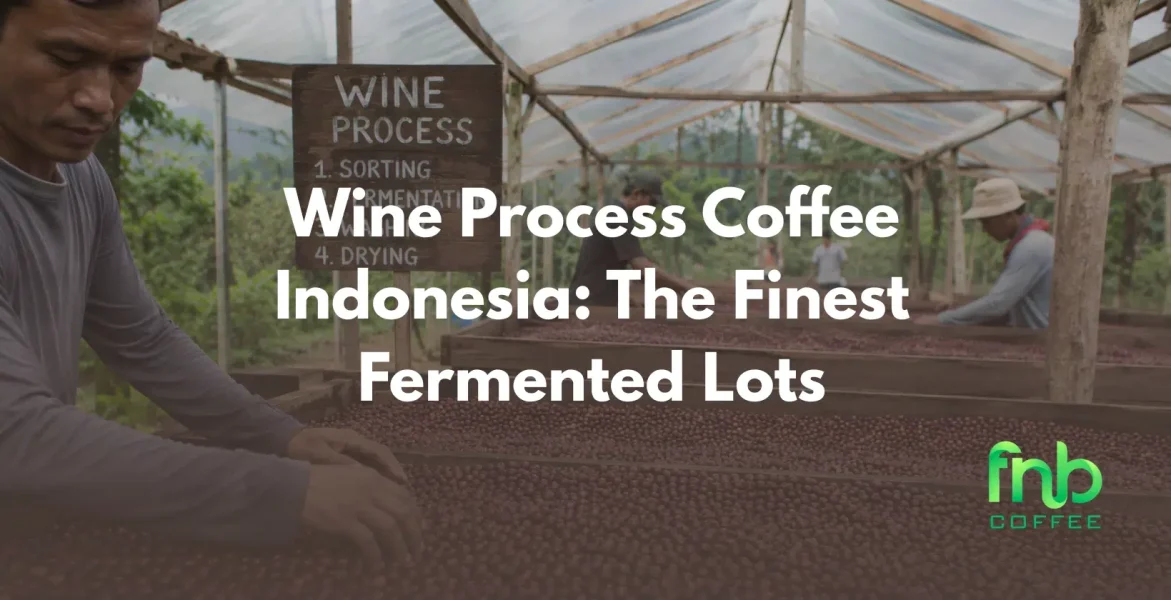
Sorted cherries go into sealed tanks or airtight containers rather than directly onto drying beds. This oxygen-free environment forces specific fermentation pathways that create the deep, wine-like aromatic compounds the method is known for. Fermentation runs from 10 to 40 days depending on the desired intensity.
Stage 3: Controlled Drying
Once the anaerobic phase is complete, producers transfer cherries to raised drying beds. Unlike passive natural drying, wine process drying requires regular cherry rotation and moisture monitoring. Total drying time typically runs 30 to 60 days.
Stage 4: Milling and Grading
Dried cherries pass through dry milling to expose the green bean, which then gets graded and cupped. Only lots scoring 84 or above qualify as specialty grade, and moisture is stabilized between 11 and 13 percent before export.
That full cycle can take two months or more, which is one of the primary reasons wine process coffee Indonesia commands higher prices than washed or semi-washed Indonesian lots.
Flavor Profile: What to Expect in the Cup
The cup character that wine process coffee Indonesia delivers is genuinely unlike what most buyers expect from an Indonesian origin. Traditional Indonesian profiles lean earthy, herbal, and full-bodied. Wine process lots push the flavor spectrum in a different direction entirely.
| Flavor Attribute | Typical Indonesian Wine Process Profile |
|---|---|
| Aroma | Fermented dark fruit, dried plum, grape must, hibiscus |
| Flavor | Berry jam, raisin, tamarind, dark chocolate, tropical spice |
| Acidity | Medium to medium-high, rounded and wine-like |
| Body | Full, syrupy, heavy mouthfeel |
| Aftertaste | Long, sweet, slightly tannic |
| Sweetness | Naturally high, jammy without being cloying |
Compare this to a standard Gayo washed lot, which delivers clean citrus brightness and herbal notes with a lighter body. The wine process version of the same Gayo origin transforms into something dramatically richer, darker, and more complex. That transformation is exactly why buyers add these lots to their premium single-origin programs.
FNB Coffee’s Wine Process Indonesia Product Line
FNB Coffee sources directly from Indonesian cooperatives, and every lot gets Q Grader-verified before it ships. The minimum purchase is USD 100, and green bean orders carry an additional USD 28 Phyto and Quarantine fee per shipment. Here are the key wine process and fermentation-method lots available now:
Gayo Wine Coffee — $32 to $53/kg
The standout product in FNB Coffee’s wine process coffee Indonesia lineup. Sourced from the Takengon area of Central Aceh at 1,200 to 1,600 meters above sea level. The cherries undergo anaerobic fermentation in sealed tanks for 10 to 40 days, producing pronounced notes of dark berries, plum, raisin, and a pleasant red-wine-like acidity with a full, syrupy body. Cupping score: 84+. Available as green beans, roasted beans, or ground coffee.
Best for: Single-origin espresso programs, specialty filter menus, premium retail packaging, and café menus targeting adventurous buyers.
Bali, Java, Gayo and Mandheling Wine — Specialty Grade
A multi-origin wine process blend combining four of Indonesia’s most respected growing regions. Bali brings bright red berry notes; Java contributes dark fruit and raisins; Gayo adds layered acidity and tropical spice; Mandheling delivers deep earthy sweetness and a syrupy body. The cherries go through a drying process of 30 to 60 days, significantly longer than standard naturals. Altitude range spans 1,200 to 1,700 meters. Cupping score: 84+.
Best for: Wholesale buyers wanting geographic variety within a single wine-processed SKU, private label house blends, and café roasters building a signature Indonesian offering.
Both products carry Fair Trade, Organic, USDA, Rainforest Alliance, and Halal certifications, which means they meet import requirements across most major destination markets without additional sourcing verification.
For a detailed exploration of what makes Gayo Wine specifically so distinctive within the broader Indonesian wine-processed category, the Gayo Wine Coffee deep dive on FNB Coffee’s blog covers the history, processing nuances, and flavor expectations in full.
Who Buys Wine Process Coffee Indonesia, and Why
The buyer profile for these lots is fairly consistent across markets. Demand around wine process coffee Indonesia comes from three main segments.
- Specialty roasters building curated single-origin menus who need a process-differentiated Indonesian product with a strong story for retail customers.
- Green coffee importers filling portfolio gaps for clients who carry washed Ethiopians and Colombian naturals but need a fermentation-forward Indonesian option to complete their range.
- Private label coffee brands who want a premium Indonesian lot that tastes exceptional and tells an interesting story on packaging, without investing in direct origin relationships.
According to Perfect Daily Grind, specialty coffee consumers increasingly make purchasing decisions based on processing method rather than origin country alone. That shift means wine process coffee Indonesia is not just a supply chain decision but an active marketing asset.
For a deeper look at the range of Indonesian bean varieties that pair with wine processing across different origins, the guide to eight types of Indonesian coffee beans on FNB Coffee is a practical starting point. Buyers can also explore and compare the full range of available fermented lots through FNB Coffee’s Indonesia specialty coffee collection.
Conclusion
Wine process coffee Indonesia is a commercially serious product category built on decades of farming expertise, cooperative investment, and unmatched terroir diversity. From Gayo’s sealed fermentation tanks to Kintamani’s long drying beds, Indonesian producers bring real craft to this method. For any buyer building a specialty program worth taking seriously, sourcing these lots is one of the clearest quality upgrades available at origin pricing.
If you are ready to add wine process coffee Indonesia to your product line, FNB Coffee makes it easy to get started. Browse the full collection at FNB Coffee, request a sample of the flagship Gayo Wine Coffee, or reach out directly via WhatsApp at +62 811 6171 777 to discuss bulk pricing, private label packaging, and shipping logistics for your next order.