Last Updated on 26 Mar 2026 by Pippo Ardilles
Indonesia is renowned for its rich and diverse coffee culture, and among the many coffee varieties, one stands out for its exclusivity and intriguing production method: Indonesian Coffee Civet. Known globally as Kopi Luwak, this unique coffee has captured the attention of coffee enthusiasts and connoisseurs due to its distinct flavor and the fascinating process behind its production.
But what exactly makes Indonesian Coffee Civet so special? Let’s dive into its origin, production process, flavor profile, and more, to understand why it is considered one of the most luxurious coffees in the world.
What is Indonesian Coffee Civet (Kopi Luwak)?
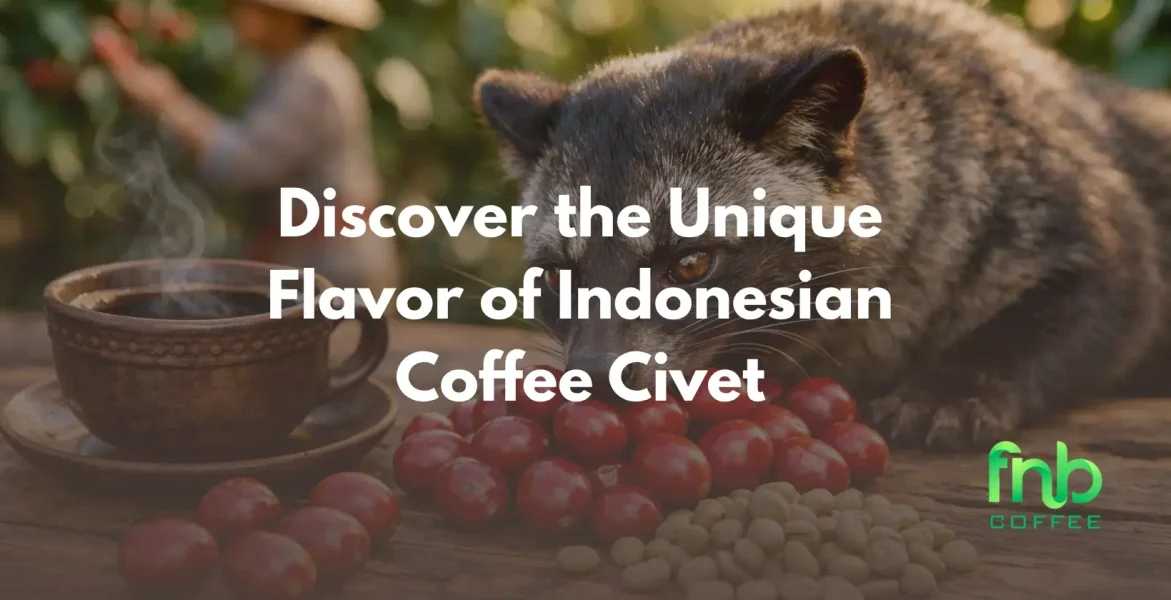
Indonesian Coffee Civet, or Kopi Luwak, is a specialty coffee made from beans that have been consumed and excreted by the civet cat. This unique fermentation process in the civet cat’s digestive system is what differentiates Kopi Luwak from other types of coffee.
The beans are first eaten by the civet cat, which digests the outer fruit layer, leaving the beans relatively untouched. These beans are then excreted, collected, and cleaned before being roasted to create a coffee like no other.
The origins of Kopi Luwak trace back to Indonesia, where it has been traditionally made for centuries. Initially, it was the farmers who discovered that civet cats ate the ripest coffee cherries, and the beans that passed through their digestive systems produced a coffee with a distinct, smooth taste.
This discovery led to the production of Kopi Luwak, which quickly became a prized commodity among coffee drinkers.
How is Indonesian Coffee Civet Made?
The production of Indonesian Coffee Civet is a meticulous and fascinating process that begins with the civet cat. These small, nocturnal creatures are native to the Indonesian archipelago and feed on the ripest coffee cherries. The cherries are rich in sugar and offer the civet a natural, healthy diet.
Once the cherries are consumed, they pass through the civet’s digestive tract, where they undergo a natural fermentation process. The fermentation inside the stomach of the civet is believed to break down the beans’ proteins, which are responsible for coffee’s bitterness. This process enhances the flavor of the beans, making them less acidic and giving them a smoother, richer taste.
After being excreted by the civet, the beans are collected, cleaned, and dried. The beans undergo a roasting process, just like any other coffee, to develop their distinct flavors.
The result is a cup of coffee that has a unique taste profile — one that is often described as earthy, smooth, and sometimes with chocolatey or caramel notes.
The Taste and Quality of Indonesian Coffee Civet
Indonesian Coffee Civet is often hailed as one of the smoothest and most luxurious coffees available. The fermentation process inside the civet’s digestive system reduces the bitterness typically found in coffee, resulting in a coffee that is rich and full-bodied, yet mild and smooth.
The flavor profile of Kopi Luwak is one of its key selling points. Depending on the region in which it is produced, the flavor can vary, but it is generally characterized by earthy undertones with a hint of sweetness. Some people detect notes of chocolate, caramel, or even vanilla, making it a complex and delightful experience for the palate.
Compared to other coffee types, Indonesian Coffee Civet is less acidic and has a more rounded flavor. This makes it an ideal choice for those who prefer a smooth and balanced cup of coffee.
The careful production process, combined with the unique flavor profile, is why Kopi Luwak commands a premium price in the market.
Ethical Considerations and Sustainability in Civet Coffee Production
While Indonesian Coffee Civet is celebrated for its taste and uniqueness, it has also faced ethical scrutiny. In some parts of Indonesia, civet cats are kept in captivity and force-fed coffee cherries to produce Kopi Luwak. This practice is harmful to the animals and is considered unethical by many in the coffee industry.
However, the growing demand for ethical and sustainable coffee has led to the rise of free-range civet coffee production. In these systems, civet cats are allowed to roam freely in their natural habitat and select the coffee cherries they prefer to eat. This ensures that the coffee is produced in a way that respects the welfare of the animals.
When purchasing Indonesian Coffee Civet, it is important to look for certifications that guarantee the coffee is ethically produced.
Free-range civet coffee is more sustainable and humane, and it ensures that the coffee you’re drinking is not only of the highest quality but also produced in a way that supports ethical practices.
How to Enjoy Indonesian Coffee Civet
Indonesian Coffee Civet can be brewed in several ways, depending on personal preference. For the best experience, many coffee aficionados recommend using a French press or pour-over method.
These methods allow the rich flavors of the coffee to shine through, providing a full-bodied cup of coffee that highlights the unique qualities of Kopi Luwak.
If you prefer a lighter brew, consider using a drip coffee maker or an espresso machine. Either method will produce a smooth, aromatic cup of coffee that is perfect for sipping on its own or pairing with your favorite desserts.
Where to Buy Authentic Indonesian Coffee Civet
Finding authentic Indonesian Coffee Civet can be a challenge, as many lower-quality copies flood the market. If you’re looking for a genuine and ethically sourced cup of Kopi Luwak, it’s important to purchase from reputable brands and suppliers who prioritize quality and sustainability.
At FnB Coffee, we specialize in providing the finest single-origin Indonesian coffee beans, including high-quality Indonesian Coffee Civet. With over 25 years of experience in the coffee industry, we’ve built a reputation as one of the leading suppliers of premium coffee from Indonesia. Our Kopi Luwak is sourced from ethical, free-range civet farms to ensure the highest quality and sustainability.
You can explore our selection of Indonesian Coffee Civet and other exceptional coffee varieties on our website. FnB Coffee is your trusted partner for experiencing the authentic flavors of Indonesia.
To enjoy the best Kopi Luwak, visit our product page here: FnB Coffee – Kopi Luwak
Conclusion
Indonesian Coffee Civet is truly a one-of-a-kind coffee experience. With its unique production process and complex flavor profile, it has earned its place among the most prized coffees in the world. Whether you’re a seasoned coffee enthusiast or a newcomer looking to explore new flavors, Kopi Luwak offers a rich and smooth cup that will leave you coming back for more.
If you’re ready to try the finest Indonesian Coffee Civet, FnB Coffee is here to provide you with the best selection of ethically sourced, premium coffee beans. Shop Now and indulge in the rich flavors of our Indonesian Coffee Civet — a luxurious coffee experience like no other!
FAQ
1. What is Indonesian Coffee Civet?
Kopi Luwak, or Indonesian coffee civet, is made using beans that have been eaten and excreted by civet cats. The fermentation in the digestive system of the civet cat is said to enhance the flavor of the beans, making it unique and highly sought after.
2. How does Indonesian Coffee Civet differ from other coffees?
The unique process of fermentation in the civet’s stomach imparts a smoother, less acidic taste compared to traditional coffee beans. It often has earthy, chocolatey, and caramel notes.
3. Why is Indonesian Coffee Civet so expensive?
The labor-intensive process of collecting the beans, coupled with the limited supply and the specialty nature of the coffee, makes it one of the most expensive coffee varieties in the world.
4. Are there ethical concerns with Indonesian Coffee Civet?
Yes, there are concerns regarding the captivity of civet cats in some coffee production processes. Ethical, free-range civet coffee is recommended to ensure humane treatment of the animals.

I write for FnB Coffee, and I always have a passion for writing anything that can presents Indonesian Coffee Diversity. From the highlands of Sumatra to the volcanic soils of Java and the unique flavours of Sulawesi, I hope to tell a plethora of stories to showcase the history, customs, and creativity behind Indonesia’s coffee culture. From the cultivation side of farming and sustainability, to brewing and flavor notes, my articles dive into everything to find out what makes Indonesian coffee truly one of a kind.