Last Updated on 20 May 2026 by Tania Putri
Most espresso drinkers blame the machine when shots run sour, watery, or burnt. The real culprit, however, usually sits right next to it on the bench. A capable coffee grinder for espresso shapes pressure, flow, and flavor far more than the brew unit itself.
This guide walks roasters, cafe owners, and home baristas through every layer of the category. Readers will see which features truly matter, which mistakes drain budgets, and how the right grind protects the beans they paid good money for. Pair it with a proper home espresso setup and the upgrade pays back fast.
What Is a Coffee Grinder For Espresso?
A coffee grinder for espresso is a precision burr mill engineered to produce a very fine, uniform particle size. Espresso demands grounds finer than table sugar, and only a true espresso-grade burr can hold that consistency shot after shot.
Unlike drip-coffee grinders, these machines feature tighter burr adjustments, stronger motors, and tougher burr metallurgy. According to the Specialty Coffee Association, grind uniformity drives extraction quality more than any other single variable.
Anatomy: The Parts That Matter
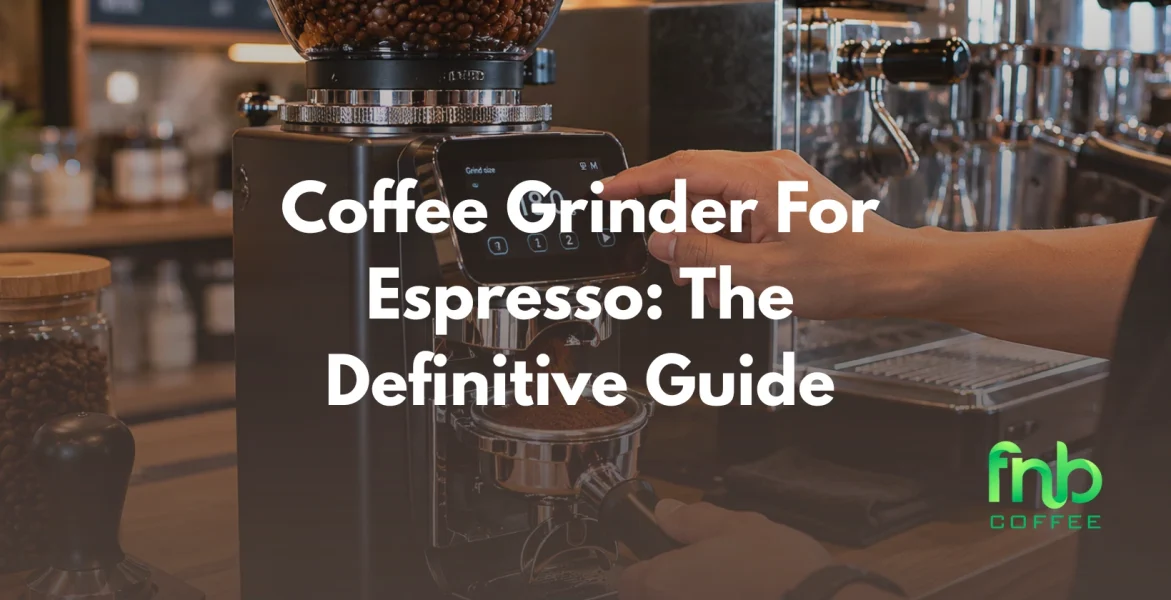
Knowing the parts of a coffee grinder for espresso helps buyers diagnose issues and compare brands honestly. Here are the seven core components every serious unit shares:
- Hopper holds the beans and protects them from oxygen and light.
- Burrs (flat or conical) crush beans into uniform particles. See Wikipedia’s burr mill entry for engineering details.
- Adjustment collar sets the grind size in stepped or stepless increments.
- Motor drives the burrs, ideally above 250 watts for espresso loads.
- Doser or doserless chute delivers grounds into the portafilter.
- Anti-static system reduces clumping and waste.
- Control panel programs dose time, weight, or single and double shots.
A clean anatomy means easier cleaning, faster troubleshooting, and longer service life.
Use Case Recommendations: Who Needs One?
Not every coffee drinker actually needs a dedicated espresso grinder. Therefore, the right pick depends on volume, skill level, and budget.
- Home baristas pulling one to four shots daily do well with compact 58mm-ready models.
- Pro-sumers and pop-up cafes benefit from grind-by-weight units that keep shots consistent.
- Specialty cafes and roasters require commercial-grade machines with 64mm to 83mm burrs.
- Offices and boutique hotels prefer low-noise grinders with sealed, light-protected hoppers.
Matching the tool to the workflow prevents costly upgrades and frustrated baristas later.
Recommended Coffee Grinder For Espresso at Three Price Tiers
Spending more does not always buy better coffee. However, certain features only appear once buyers cross specific price brackets. Below is a brand-agnostic snapshot of what each tier of coffee grinder for espresso delivers in 2026.
| Tier | Price Range (USD) | What Buyers Get | Best For |
|---|---|---|---|
| Budget | $150 to $350 | 40mm steel conical burrs, stepped adjustment, basic timer | Home use, 1 to 4 shots daily |
| Mid-range | $350 to $900 | 54mm to 64mm burrs, stepless dial, grind-by-time | Power users, small cafes |
| Premium | $900 to $3,000+ | 64mm to 83mm flat burrs, grind-by-weight, single dosing | Specialty cafes, roasters |
Buyers should match burr diameter to daily throughput rather than chase marketing buzzwords. As Perfect Daily Grind regularly notes, burr quality outweighs brand prestige.
5 Key Specs to Check Before Buying
Five technical specs separate a real espresso grinder from a glorified pepper mill. Here is a quick checklist for shoppers:
| # | Spec | Why It Matters |
|---|---|---|
| 1 | Burr type (flat vs conical) | Affects clarity, body, and mouthfeel |
| 2 | Burr size in millimeters | Larger burrs grind cooler and faster |
| 3 | Adjustment precision (stepped vs stepless) | Stepless dialing nails espresso ratios |
| 4 | Motor RPM and torque | Steady RPM prevents fines and excess heat |
| 5 | Retention and workflow | Single dosing reduces stale grounds |
Common Mistakes When Buying a Coffee Grinder For Espresso
Many shoppers overspend or underspend because they trust marketing instead of physics. These mistakes burn budgets and ruin shots:
- Choosing a blade grinder and expecting espresso-grade output.
- Pairing a $3,000 machine with a $99 grinder, then blaming the beans.
- Ignoring burr replacement intervals (most burrs last 500 to 1,500 kg).
- Skipping grind-by-weight on high-volume bars.
- Buying a coffee grinder for espresso based on color or aesthetics, not burr engineering.
Smart buyers read independent specs first. Then they check warranty, parts availability, and local service before purchase.
Maintenance Overview for Your Coffee Grinder For Espresso
Even the finest coffee grinder for espresso will choke without routine care. Maintenance is straightforward once a weekly rhythm sets in.
- Daily: brush out the chute and dosing area after the last shot.
- Weekly: vacuum the burr chamber and wipe the hopper with a dry cloth.
- Monthly: deep-clean with food-safe grinder tablets to dissolve coffee oils.
- Quarterly: inspect burrs for dull edges or chipped teeth.
- Yearly: replace burrs once extraction times drift or fines increase.
Beans also matter. As FNB Coffee explains in this guide on why some coffee beans turn oily, oily dark roasts clog burrs faster than balanced medium roasts. The National Coffee Association also recommends rotating cleaner-tasting origins to extend equipment life.
Pair Your Grinder With Premium FNB Coffee Beans
A precision grinder deserves clean, traceable beans. FNB Coffee supplies single-origin Indonesian beans that grind evenly and pull beautifully under pressure. Buyers can start with these crowd favorites:
- Aceh Gayo Coffee: bright, balanced, ideal for daily espresso.
- Sumatra Mandheling Coffee: heavy body, chocolate finish, espresso classic.
- Gayo Wine Coffee: fruit-forward, ideal for showcasing burr clarity.
- Sumatra Lintong Coffee: earthy, syrupy, cafe favorite for milk drinks.
Want to taste before buying? Read about why unroasted green coffee beans produce better espresso and learn how espresso shot caffeine actually works in the body.
Frequently Asked Questions
Q1: How often should one clean a coffee grinder for espresso? Clean the chute daily, vacuum the burr chamber weekly, and run grinder tablets monthly to dissolve coffee oils. Most professional baristas swap burrs every 12 to 18 months.
Q2: Are conical or flat burrs better for espresso? Conical burrs deliver fuller body and forgiving extraction. Flat burrs produce clearer, more separated flavor notes. Neither is universally superior; the choice depends on the desired cup profile.
Q3: Can a coffee grinder for espresso also grind for pour-over? Yes, but only if the model offers a wide stepless range. Most espresso-first grinders struggle above a medium-coarse setting, so a dedicated brew grinder still wins for filter coffee.
Q4: How long do espresso grinder burrs typically last? Steel burrs typically grind 500 to 800 kg of coffee. Tungsten or ceramic-coated burrs may reach 1,200 to 1,500 kg before they need replacement.
Conclusion
Choosing the right coffee grinder for espresso protects every other investment in your coffee chain, from the green beans to the machine to the barista’s precious time. Buyers who match burr size, adjustment precision, and workflow features to their actual daily volume always pull better, cleaner, and far more consistent shots over the long term.
Now is the time to upgrade your espresso routine with beans truly worthy of your new gear. Browse FNB Coffee’s full Indonesian collection at FNB Coffee, request a free sample, or contact our wholesale team for export pricing. Taste the real difference of single-origin, Q-graded beans from Sumatra, Java, and beautiful Bali in every cup today.