
Last Updated on 19 May 2026 by Tania Putri
For baristas, cafe owners, and home coffee lovers, the espresso machine sits at the heart of every great cup. However, even the best machine starts to suffer when limescale builds up inside its boiler and tubing. Knowing how to descale espresso machine units properly keeps every shot tasting bright, clean, and balanced. On the other hand, ignoring the task often leads to bitter shots, slower pulls, and expensive repairs down the line.
This guide walks readers through the entire descaling process in plain, practical language. It also shares pro tips that working baristas use every week behind the bar. So whether someone runs a busy specialty café or simply enjoys home espresso on weekends, mastering how to descale espresso machine routines protects both the equipment and the flavor of every cup poured.
Why Knowing How to Descale Espresso Machine Matters
Limescale forms when calcium and magnesium in tap water heat up and cling to internal parts. According to the USGS Water Hardness data, more than 85% of homes in the United States receive hard water. Therefore, descaling is not optional, but essential maintenance for any machine in regular use. In fact, most warranty claims rejected by manufacturers cite skipped or delayed descaling as the root cause of pump failure.
Furthermore, the long term benefits of proper descaling include:
- Faster heat up time and steadier brew temperature
- Consistent water flow through the group head
- Brighter, sweeter espresso flavor in every single shot
- Lower repair bills and longer overall machine lifespan
- A cleaner steam wand for better milk texture
Simply put, learning how to descale espresso machine equipment correctly is one of the smartest skills any coffee operator can build for both quality and profit.
What to Prepare Before You Start
Before starting, gather the following items in one place so the process flows smoothly without unexpected pauses:
- Food grade descaler such as citric acid, lactic acid, or a commercial blend
- Clean filtered water for both mixing and rinsing
- An empty container of around 2 liters to catch waste water
- A microfiber cloth and a small soft brush
- The owner’s manual for the specific model
Most importantly, always check what the Specialty Coffee Association recommends for water quality and treatment profiles. Likewise, keep a logbook noting the descaler brand, ratio, and date for every cycle, since clean records help during warranty service calls and team handovers.
Step-by-Step Guide on How to Descale Espresso Machine
Now comes the practical part. The steps below describe how to descale espresso machine units of nearly every brand, including semi automatic, automatic, and super automatic models. Each step builds naturally on the last.
Step 1: Power Off and Cool Down
First, turn off the machine and let it cool for at least 30 minutes. Working on hot equipment risks burns and produces uneven cleaning results.
Step 2: Empty and Rinse the Water Tank
Next, remove the water tank, dump leftover water, and rinse it under a running tap. Furthermore, take out the water softener filter if your machine has one, since most filters absorb and block the descaler from doing its job.
Step 3: Mix the Descaling Solution
Now, mix the descaler with fresh water according to the manufacturer’s ratio. For example, most citric acid blends use 30 grams of powder per liter of water. Then pour the prepared mixture into the empty tank.
Step 4: Run the Descaling Cycle
After mixing, press the descale button or run hot water through the group head and steam wand for 15 to 30 seconds at a time. Pause between bursts so the solution sits inside the boiler and slowly breaks down stubborn deposits. Most cycles take between 20 and 45 minutes from start to finish, depending on the machine and the level of scale built up over time.
Step 5: Rinse Thoroughly Twice
When the cycle ends, refill the tank with fresh filtered water. Run at least two full tanks through every outlet, including the group head and the steam arm. Otherwise, leftover descaler residue can taint future shots and slowly damage rubber seals. To check rinse quality, pull a quick test shot and smell the puck. A clean, neutral aroma means the rinse is complete.
Step 6: Wipe and Reassemble
Finally, wipe down the exterior, polish the steam wand with a clean cloth, and place the water filter back in. Indeed, a clean exterior signals a clean interior to both staff and customers behind the bar.
Key Factors to Consider When Learning How to Descale Espresso Machine
After running through the steps, operators should track a few key factors to keep the machine in peak shape. Anyone serious about how to descale espresso machine units should monitor the variables listed below.
| Factor | What to Check | Why It Matters |
|---|---|---|
| Water Hardness | TDS meter reading | Predicts scale buildup speed |
| Usage Volume | Shots pulled per day | Sets the descaling frequency |
| Descaler Type | Citric, lactic, or branded | Affects safety on metal parts |
| Filter Status | Months since last change | Reduces scale at the source |
| Boiler Material | Brass, stainless, or aluminum | Determines chemical compatibility |
| Manufacturer Schedule | OEM recommended cycle | Protects the warranty terms |
Furthermore, the National Coffee Association suggests descaling every 1 to 3 months for busy machines. Cafés pulling 200 or more shots per day may need a monthly cycle instead of a quarterly one. As a result, many head baristas now use a simple calendar reminder paired with a quick TDS test each Monday morning to stay ahead of buildup.
Common Mistakes to Avoid While Learning How to Descale Espresso Machine
Even experienced baristas slip up. Therefore, awareness of common pitfalls helps people skip them entirely. The most frequent mistakes during how to descale espresso machine routines include the following pitfalls:
- Using vinegar instead of a real descaler, which damages seals over time
- Skipping the rinse step and leaving acid residue inside the boiler
- Forgetting to descale the steam wand, which builds scale very fast
- Running the cycle on a cold or empty boiler without warm up
- Ignoring the manufacturer’s filter and resin replacement instructions
- Mixing two different descaler brands in one tank without rinsing
For deeper context, reading the descaling agent overview on Wikipedia shows why food grade products matter so much for safety. Additionally, those serious about long term quality should review where to buy good coffee beans to pair the clean machine with a truly worthy bean.
Best Coffee Beans From FNB Coffee to Pair With Your Clean Machine
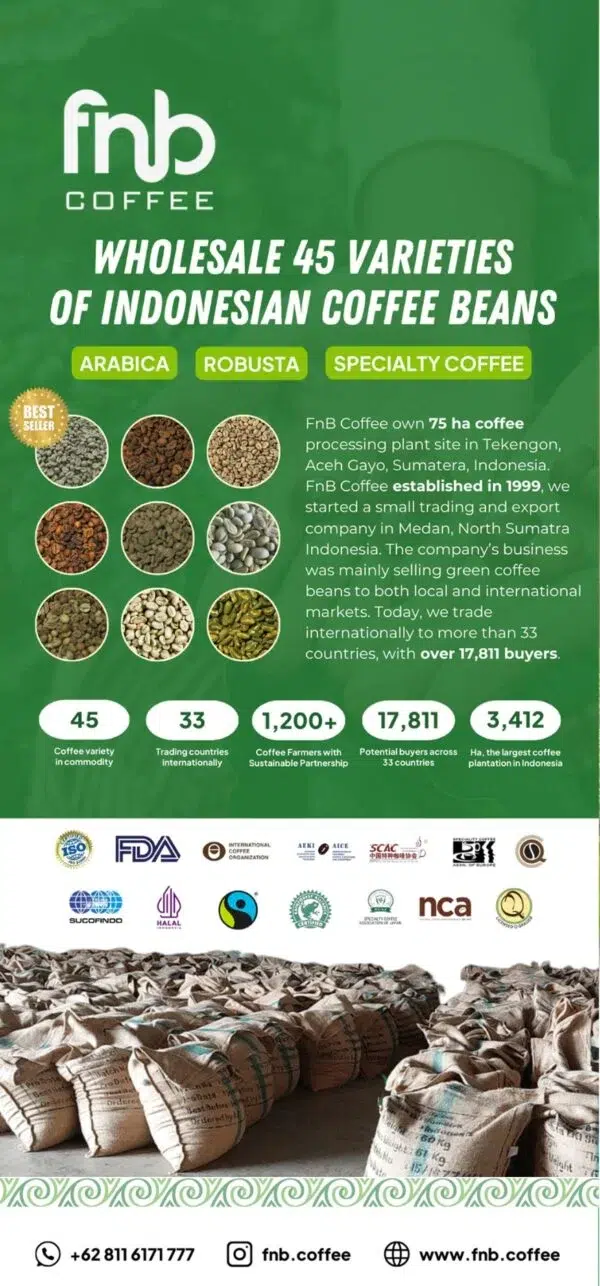
After mastering how to descale espresso machine routines, the next step is pairing that fresh equipment with truly great beans. Indeed, even spotless boilers cannot rescue tired, stale coffee. FNB Coffee offers Indonesian single origin lots that shine through any espresso program. The full lineup is detailed in the specialty coffee supplier guide for cafe owners and roasters worldwide.
| Coffee | Origin | Flavor Notes | Best Use |
|---|---|---|---|
| Sumatra Mandheling | North Sumatra | Dark chocolate, spice, earthy depth | Espresso and milk drinks |
| Gayo Wine Coffee | Aceh | Red grape, plum, caramel sweetness | Pour over, single origin espresso |
| Wild Luwak Coffee | Indonesia | Caramel, chocolate, smooth body | Premium tasting menu |
| Organic Arabica | Multiple regions | Clean, sweet, well balanced | Daily house espresso |
Moreover, every order ships with detailed cupping notes and Q Grader scores for full transparency from farm to your café counter.
Conclusion
In short, how to descale espresso machine units the right way takes patience, the proper supplies, and a simple monthly habit. By following these clear steps, anyone protects the flavor, extends equipment life, and saves real money on costly future repairs through every brewing session and busy shift behind the bar every single working day.
Ready to clean the machine and brew your finest cup yet? Anyone wondering how to descale espresso machine equipment should also upgrade the coffee inside it. Visit FNB Coffee today, request a free sample lot, and discover Q Grader certified Indonesian beans backed by over 26 years of trusted export and farmer experience across the world.