
Last Updated on 09 Nov 2026 by Pippo Ardilles
Low acid coffee is coffee that tastes smoother and less sharp than a bright, citrusy cup. All coffee contains acids, so the term usually refers to lower perceived acidity, which comes from origin, processing, roast level and brewing method.
The least acidic choices tend to be wet-hulled Indonesian coffees such as Sumatra Mandheling, low-grown Brazilian naturals, monsooned coffees, and darker roasts of any of these.
Quick summary:
- Low acid coffee still contains acids. The label mostly describes how sharp the cup tastes.
- Wet-hulled Sumatra and Sulawesi coffees, Brazil, Peru, Mexico and Monsooned Malabar are common low acid choices.
- Medium-dark and dark roasts usually taste less acidic than light roasts of the same bean.
- Cold brew often tastes smoother, although its measured pH is close to that of hot coffee.
- Low acid coffee is not a treatment for GERD, reflux or ulcers, and individual tolerance varies.
What Is Low Acid Coffee?
Low acid coffee has a lower perception of acidity or a smoother acid profile than bright, sharp or citrus-like coffees. It is never acid-free. A 2018 study in Scientific Reports measured cold and hot brews of light roast coffees at between pH 4.85 and 5.13.
Acids shape aroma, sweetness and mouthfeel. In specialty coffee, bright acidity can be a positive quality when it tastes clean and fruit-like, but too much of it comes across as sour or harsh. A low acid cup usually leans toward chocolate, nuts, caramel or earthy notes instead of citrus, berry or tangy flavors.
How do they make low acid coffee?
Most low acid coffee is made by selecting naturally mellow origins and roasting them longer or darker. Some brands add a proprietary step, such as treating the beans before roasting. “Low acid” is a descriptive term without one agreed threshold, so check what a brand actually did and whether it published a pH or test result.
Who Should Consider Low Acid Coffee?
Low acid coffee is worth trying if regular coffee tastes too sharp for you, or if you notice discomfort after bright or light-roasted cups. It also helps café owners and coffee buyers who need a mellow option for customers who ask for coffee that is “smooth” or “not sour.”
Low acid coffee is not a medical treatment for GERD, acid reflux, gastritis or ulcers. If coffee regularly causes pain, burning, nausea or reflux symptoms, consult a healthcare professional and track your personal triggers. Caffeine can be a trigger for some people as well, and decaf has its own acidity profile.
What Makes Coffee Taste Acidic?
Perceived acidity depends on both the coffee and how it is prepared.
| Factor | Tends to taste less acidic | Tends to taste more acidic |
|---|---|---|
| Growing conditions | Lower, warmer farms | High, cool farms |
| Processing | Wet-hulled, monsooned | Washed |
| Roast level | Medium-dark and dark | Light |
| Brewing | Cold brew, well-controlled immersion | Fast, hot extraction of delicate coffees |
| Extraction | Balanced | Under-extracted, which tastes sour |
Which Coffee Is Least Acidic?
Sumatra Mandheling, wet-hulled Sulawesi Toraja, Brazilian naturals and Monsooned Malabar are among the least acidic coffees you can buy. Each one gets there for a different reason, and results still vary by lot and roast.
| Coffee | Why it tastes low in acid | Typical notes |
|---|---|---|
| Sumatra Mandheling | Wet-hulled processing | Earthy, cocoa, tobacco |
| Wet-hulled Sulawesi Toraja | Wet-hulled processing | Dark chocolate, nuts, cinnamon |
| Sumatra Gayo | Wet-hulled lots with full body | Chocolate, spice, brown sugar |
| Brazil | Lower altitude and natural processing | Nuts, chocolate, caramel |
| Peru | Mild, balanced highland profile | Mild chocolate, nuts |
| Mexico | Soft, light-bodied profile | Mild chocolate, toasted nuts, caramel |
| Monsooned Malabar | Green beans exposed to monsoon humidity | Musty, earthy, lightly spiced |
| Kopi Luwak | Digestion by civets, when authentic | Soft chocolate, caramel, earthy |
Sumatra Mandheling
Sumatra Mandheling is the usual first choice for drinkers who want low acidity with heavy body. Most Sumatran coffee is wet-hulled in the giling basah style, with the parchment removed while the bean is still moist, which builds a syrupy body and mutes brightness. FNB Coffee’s Mandheling lists medium-low acidity, a full body and earthy, cocoa and tobacco notes. It also holds up well in medium to dark roasts. For more on the origin as a whole, see this guide to Sumatra low acid coffee.
Sulawesi Toraja
Toraja coffee is grown in the highlands of Sulawesi and is traditionally wet-hulled, which gives those lots Sumatra’s muted acidity and weight. Fully washed Toraja also exists and can taste noticeably brighter, so low acid buyers should look for wet-hulled lots and check the cupping report. Expect a full body with dark chocolate, nuts and cinnamon.
Sumatra Gayo
Gayo coffee varies widely with processing, roast and producer. FNB Coffee’s Aceh Gayo lists medium-to-low acidity and a full body, but other lots from the same highlands can be bright and complex. Look for chocolate, spice or brown sugar notes on the label, and be aware that wine process Gayo lots and other fermented coffees taste far fruitier.
Brazil
Much of Brazil’s coffee grows at lower elevations and is natural processed, which adds sweetness and body while keeping brightness in check. The result is a nutty, chocolatey, mellow cup that suits espresso blends, milk drinks and everyday brewing.
Peru and Mexico
Peruvian coffee is mild and well balanced, with soft acidity and light sweetness. Mexican coffee, especially from Chiapas, is lighter in body with a clean finish. Both suit people who want low acidity without the heavy, earthy texture of Indonesian origins.
Monsooned Malabar
Monsooned Malabar from India gets its low acidity from processing after harvest. Green beans are exposed to humid monsoon winds for weeks in open-sided warehouses, where they swell, turn pale and lose much of their acidity. The cup is heavy and mellow with musty, earthy notes, so it divides opinion. It also works in small amounts to soften a sharper blend.
Kopi Luwak
Authentic Kopi Luwak is often described as exceptionally smooth, and digestive enzymes in the civet are thought to change some of the compounds in the bean. It is rare, expensive and frequently counterfeited, so ask for proof of origin before paying for it. It makes more sense as an occasional cup than as a daily low acid coffee.
Java: a middle option
Java coffee is a better fit for drinkers who can tolerate some brightness. FNB Coffee’s Java Preanger, for example, lists moderate acidity, medium body and floral, herbal and citrus notes, so it needs a darker roast to reach a mellow profile.
Arabica vs Robusta: Which Is Better for Low Acid Coffee?
Arabica is usually the better choice for a smooth, balanced low acid coffee, although origin and roast matter more than species alone. Choose arabica with chocolate, nutty, caramel, earthy or spice notes.
Robusta usually has more caffeine, heavier body and stronger bitterness. Since caffeine bothers some sensitive drinkers, robusta may not suit everyone looking for a gentler cup, although a good lot can add body and crema to espresso blends.
For most buyers, the safest starting point is a medium-dark arabica from Sumatra, Brazil or another mellow origin.
Does Dark Roast Have Less Acid?
Dark roast coffee usually tastes less acidic than light roast coffee because the acids behind brightness break down as roasting continues. Light roasts keep more origin character and fruit. Medium-dark and dark roasts bring heavier body and notes of dark chocolate, toasted nuts, caramel or molasses.
Darker is not always better. Over-roasted coffee can taste burnt, smoky or flat, and very dark roasts lose much of the origin’s character. A smooth roast profile lowers sharpness while keeping sweetness and body. Starting with beans that suit dark roasting gives a cleaner result than forcing a bright coffee to go dark.
Best Brewing Methods for Low Acid Coffee
Cold brew and French press tend to produce the roundest cups. Espresso and pour-over can also taste smooth, but they need closer control.
1. Cold brew
Cold brew uses cold or room-temperature water and a long steep, and it often tastes sweeter and rounder than hot coffee. The difference is mostly in taste. In the Scientific Reports study above, cold and hot brews had comparable pH, while hot brews had higher total titratable acids.
Basic cold brew recipe:
- Use coarse-ground medium-dark coffee.
- Mix 1 part coffee with 8 parts water for a ready-to-drink brew, or 1 part to 4 for a concentrate.
- Steep for 12 to 18 hours in the refrigerator.
- Filter slowly.
- Serve over ice or dilute to taste.
2. French press
French press immersion retains oils and texture, which works especially well with Sumatra, Brazil or medium-dark blends. Use a coarse grind, water around 90 to 96°C and a brew time of about 4 minutes. A grind that is too fine or a steep that runs too long makes the cup bitter and heavy.
3. Espresso
Espresso can work when the beans are roasted for balance and the extraction is dialed in. Under-extracted espresso tastes sour even when the bean itself is low in acid. If a shot tastes sour, try a finer grind, a longer extraction or better puck preparation.
4. Pour-over
Pour-over can produce a clean, gentle cup, but uneven extraction or a very fine grind can make it taste sharp or thin. Choose a medium to medium-dark roast, use a slightly coarser grind and avoid aggressive agitation.
How to Make Coffee Less Acidic at Home
Bean choice, roast and brewing all affect the result, and small changes can add up.
- Choose medium-dark or dark roast beans.
- Pick origins known for body and smoothness, such as Sumatra or Brazil.
- Switch to cold brew if hot coffee feels too sharp.
- Use a coarser grind for immersion methods.
- Avoid under-extracting espresso.
- Drink coffee with food if an empty stomach causes discomfort.
- Try decaf if caffeine seems to be your trigger.
- Keep track of which coffees and brewing methods work best for you.
Is Low Acid Coffee Healthier?
Low acid coffee is not automatically healthier than regular coffee. It may suit people who find sharp coffee uncomfortable, but tolerance is personal, and factors such as caffeine, portion size and an empty stomach can matter too. Try different origins, roasts and brewing methods, note how each one feels, and speak to a healthcare professional about recurring symptoms.
Where to Buy Low Acid Coffee Beans for Cafés and Roasters
Buy from suppliers that clearly explain origin, processing, flavor profile and sourcing standards. For cafés and roasters, the best low acid coffee is a consistent bean that works in both black coffee and milk-based drinks.
Ask about origin, processing method, moisture content, defect level, roast compatibility and expected flavor profile. Request samples, then cup them with the same brewing method your customers will use, or arrange a documented assessment through a cupping service. On menus, describe the coffee by its flavor, such as “smooth,” “chocolatey” or “full-bodied.” Avoid promising health benefits.
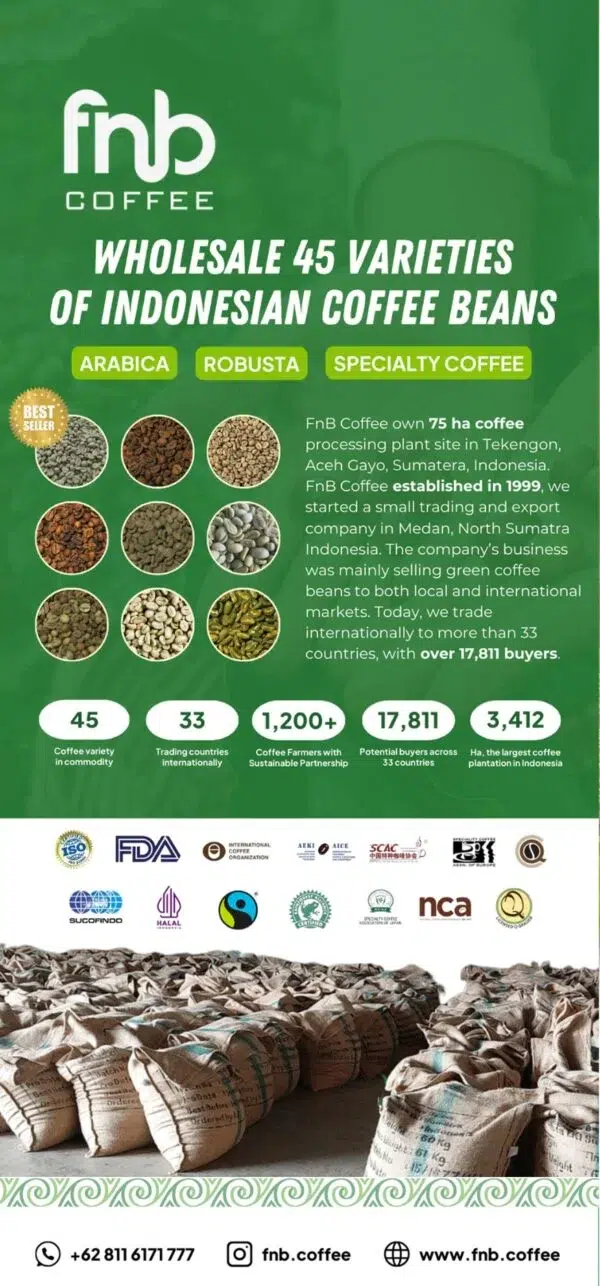
FNB Coffee supplies Indonesian green coffee beans to roasters, distributors and coffee businesses. For a smooth, full-bodied profile, start with the Sumatra coffee selections, including Mandheling and Gayo, and confirm the current lot’s cupping data before ordering. A coffee that works well for cold brew may not suit espresso, so match the bean to its intended use.
Final Thoughts
For most drinkers, the easiest starting point is a medium-dark Sumatran or Brazilian coffee brewed as cold brew or French press. A good low acid cup should still taste sweet and full. Roasters and cafés looking for a smooth Indonesian lot can request samples and pricing through FNB Coffee wholesale.
Frequently Asked Questions
1. Which coffee is the least acidic?
Monsooned Malabar and wet-hulled Indonesian coffees such as Sumatra Mandheling are among the least acidic by taste. Roasting any of them medium-dark to dark, or brewing them as cold brew, softens the cup further. Results vary by lot, so sample before buying in volume.
2. Is cold brew low in acid?
Cold brew usually tastes less acidic than hot coffee, but its pH is similar. One 2018 study found comparable pH in cold and hot brews of light roast coffees, with higher total titratable acids in the hot brews.
3. Is arabica coffee low in acid?
Arabica is not automatically low in acid. High-grown washed arabica can be very bright, while wet-hulled Sumatran arabica tastes much softer. Origin, processing and roast level tell you more than the species.
4. Does low acid coffee help with acid reflux?
Some people find low acid coffee easier to drink, but it is not a treatment for acid reflux or GERD. Caffeine and other factors can also trigger symptoms. Anyone with recurring symptoms should speak to a healthcare professional.

I write for FnB Coffee, and I always have a passion for writing anything that can presents Indonesian Coffee Diversity. From the highlands of Sumatra to the volcanic soils of Java and the unique flavours of Sulawesi, I hope to tell a plethora of stories to showcase the history, customs, and creativity behind Indonesia’s coffee culture. From the cultivation side of farming and sustainability, to brewing and flavor notes, my articles dive into everything to find out what makes Indonesian coffee truly one of a kind.